
A Wild Day at Nashville Zoo
Rare Animals, Unique Encounters and What Not to Miss
I recently spent an entire day exploring Nashville Zoo with my 6-year-old twin grandsons—and when I say an entire day, I mean it. We arrived around 9:30 a.m., stayed until nearly 5 p.m. and according to my cell phone walked more than 11,000 steps along the way.
The boys loved the animals, but some of the biggest hits were the enormous Jungle Gym, the zip line soaring across the sky, and the chance to walk among and pet the kangaroos. My personal favorite was Roza, the zoo’s rare melanistic Amur leopard. Melanism is a genetic trait that produces unusually dark pigmentation, giving her an almost entirely black coat. If you look closely in the right lighting, however, you can still see her leopard spots. She is absolutely stunning.
Nashville Zoo is larger and more spread out than I expected, so knowing which direction to go and where to find air-conditioning, food and play breaks can make a major difference when visiting with children. This guide covers the route that worked for us, the exhibits you shouldn’t miss and everything I wish I had known before we arrived.
👉 Is this your first trip to Nashville? Get my complete guide to Nashville for first-time visitors, then discover hidden gems, quirky attractions and memorable local experiences in my guide to unique things to do in and around Nashville.
Nashville Zoo at a Glance
📍 Location: 3777 Nolensville Pike, Nashville, Tennessee
🦒 Best For: Families, animal lovers and children who enjoy playgrounds and interactive experiences
⏱️ Time Needed: Allow at least three to four hours. Plan on spending most of the day if your children want to enjoy the playground, rides and animal encounters.
🌅 Best Time to Arrive: Get there when the zoo opens, particularly during the warmer months. You’ll encounter cooler temperatures, smaller crowds and potentially more active animals. We arrived around 9:30 a.m. and saw quite a bit of activity, but many of the animals became more lethargic as the day grew hotter.
🎟️ Tickets: General admission includes the animal exhibits and Jungle Gym. The carousel, train, zip line, 4D theater and lorikeet feeding require additional attraction tickets.
🅿️ Parking: On-site parking is available near the zoo entrance for free. On hot days, use the covered parking structure if possible. My daughter parked there, and her car was noticeably cooler than mine when we left.
👶 Strollers: Bring one for younger children or rent one at the zoo. The pathways are stroller-friendly, but the property is larger than it initially appears.
☀️ Summer Tip: Bring refillable water bottles, sunscreen and a portable fan. Plan your route so you can alternate outdoor exhibits with air-conditioned viewing areas.
Map of the Nashville Zoo
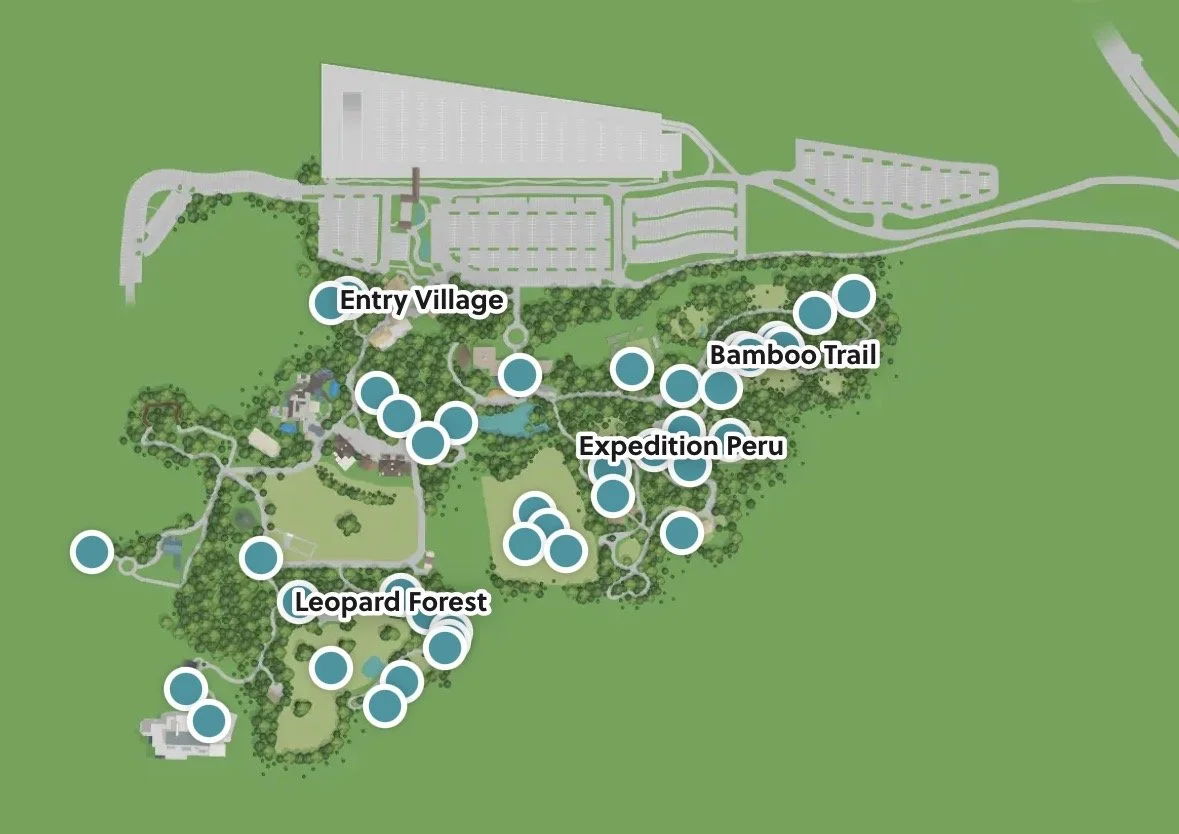
The zoo no longer provides printed maps, but guests can download the Nashville Zoo app, which includes an interactive zoo map. I recommend downloading it before your visit so you can easily locate exhibits, attractions, restaurants and restrooms throughout the day.
The zoo is arranged around several looping pathways rather than one perfectly linear route. Our route began with Leopard Forest and the African animals, continued through the center of the zoo for lunch and playtime, and then followed the longer loop through the indoor animal exhibits, Kangaroo Kickabout, Tiger Crossroads and Expedition Peru before returning to the exit. I’ve broken down our complete route below to help you see the zoo without unnecessary backtracking. However, you should adjust it around your family’s personal must-sees, especially if you have limited time.
Table of Contents
Why You'll Love the Nashville Zoo
Nashville Zoo offers much more than a traditional walk past rows of animal enclosures. Many of its habitats are large and immersive, with winding paths, indoor viewing areas and opportunities to see animals surprisingly close.
Children can walk through a kangaroo habitat, climb through the massive Jungle Gym, ride a zip line, search for birds inside the aviary and watch young animals being cared for through the windows of the veterinary center. Several of the zoo’s most memorable attractions are experiences you might easily miss if you don’t know to look for them.
It is also a destination that can genuinely fill most of a day. We arrived shortly after opening and stayed until nearly closing, yet the kids remained entertained throughout our visit.
Things to Do and My Suggested Route Through Nashville Zoo
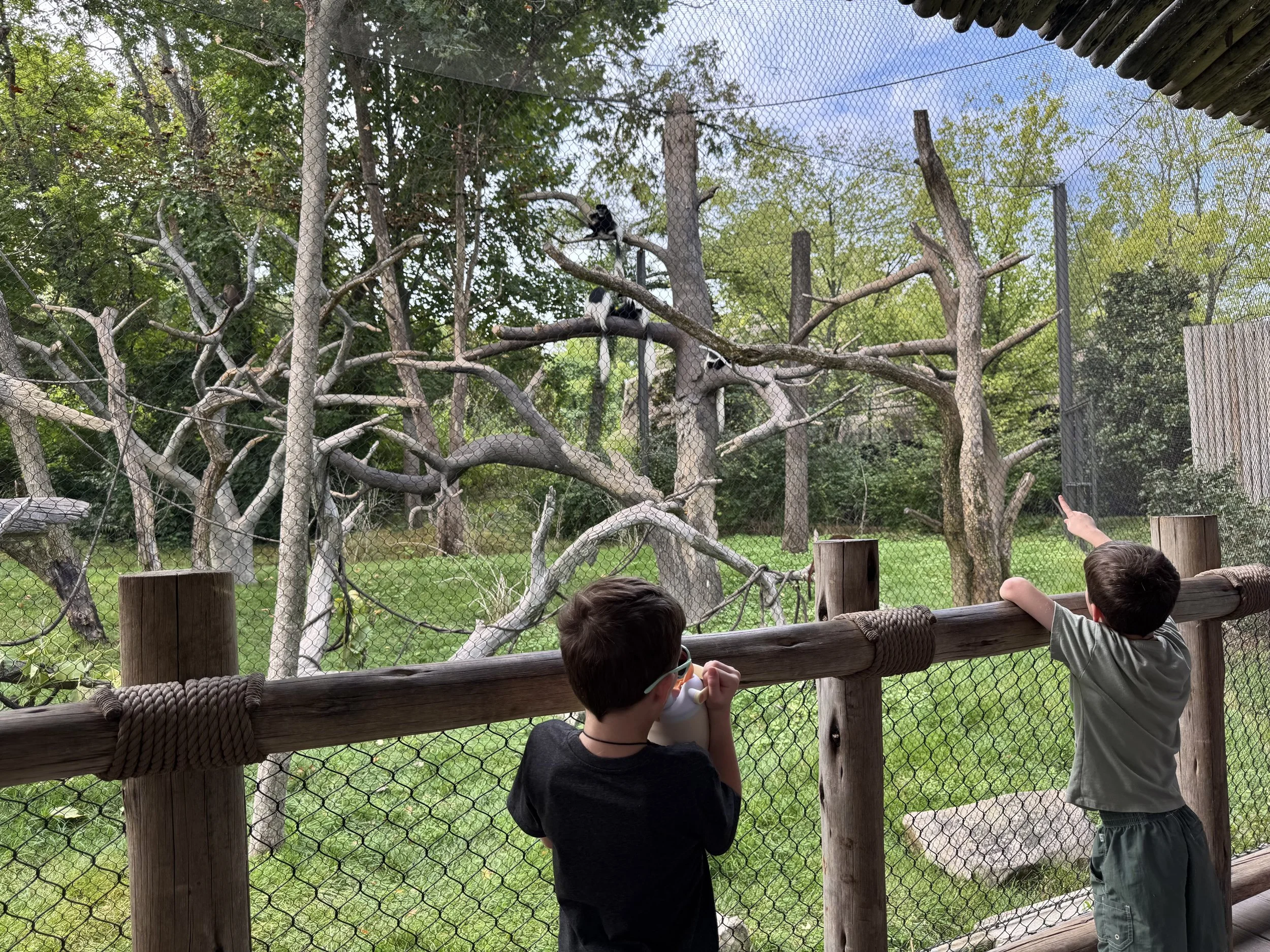
Obviously, there is no single correct way to explore Nashville Zoo. However, a first visit can feel a little overwhelming, especially without a printed map to give you an easy overview of the grounds. If you aren’t sure where to begin, this route worked well for our family and helped us see the major exhibits without unnecessary backtracking.
Fortunately, my grandsons have annual passes and visit the zoo three or four times each year, so they already knew their way around. I was grateful that I didn’t have to figure out where everything was as we went. Now I’m passing that knowledge along to help make your first visit a little easier. Exhibit access, animal visibility and pathway closures can change, so be sure to check the zoo’s app when you arrive.
🐆 Stop 1: Leopard Forest, Giraffes and Rhinos
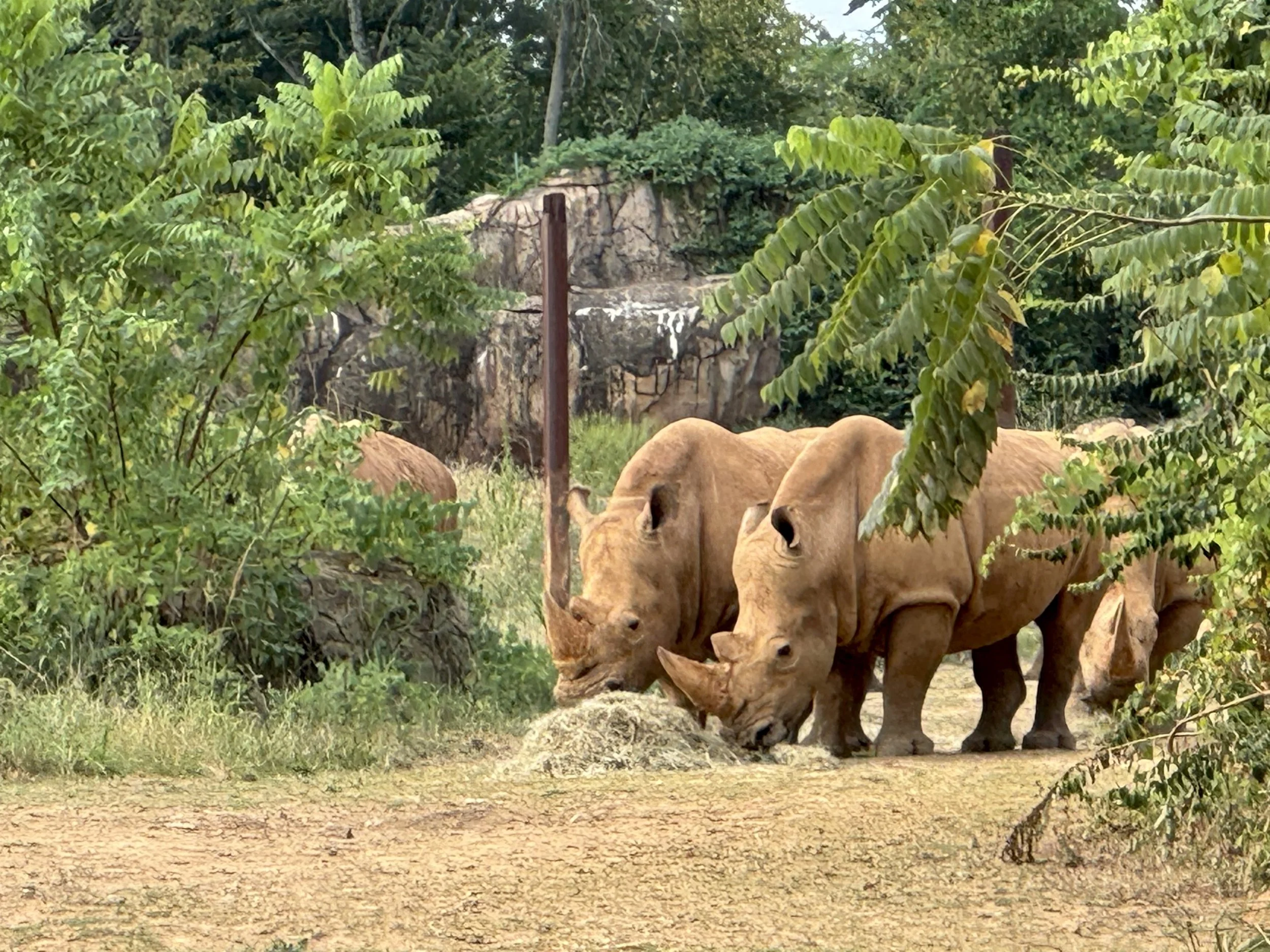
🐾 Animals You May See: Amur leopards, black-and-white colobus monkeys, DeBrazza’s monkeys, rock hyraxes, Masai giraffes and white rhinos
💛 My Highlights: Seeing the giraffes up close and spotting Roza, the zoo’s rare melanistic Amur leopard
🔎 Don’t Miss: The overhead passage where the leopards can walk directly above visitors and the interactive giraffe displays near the end of the exhibit
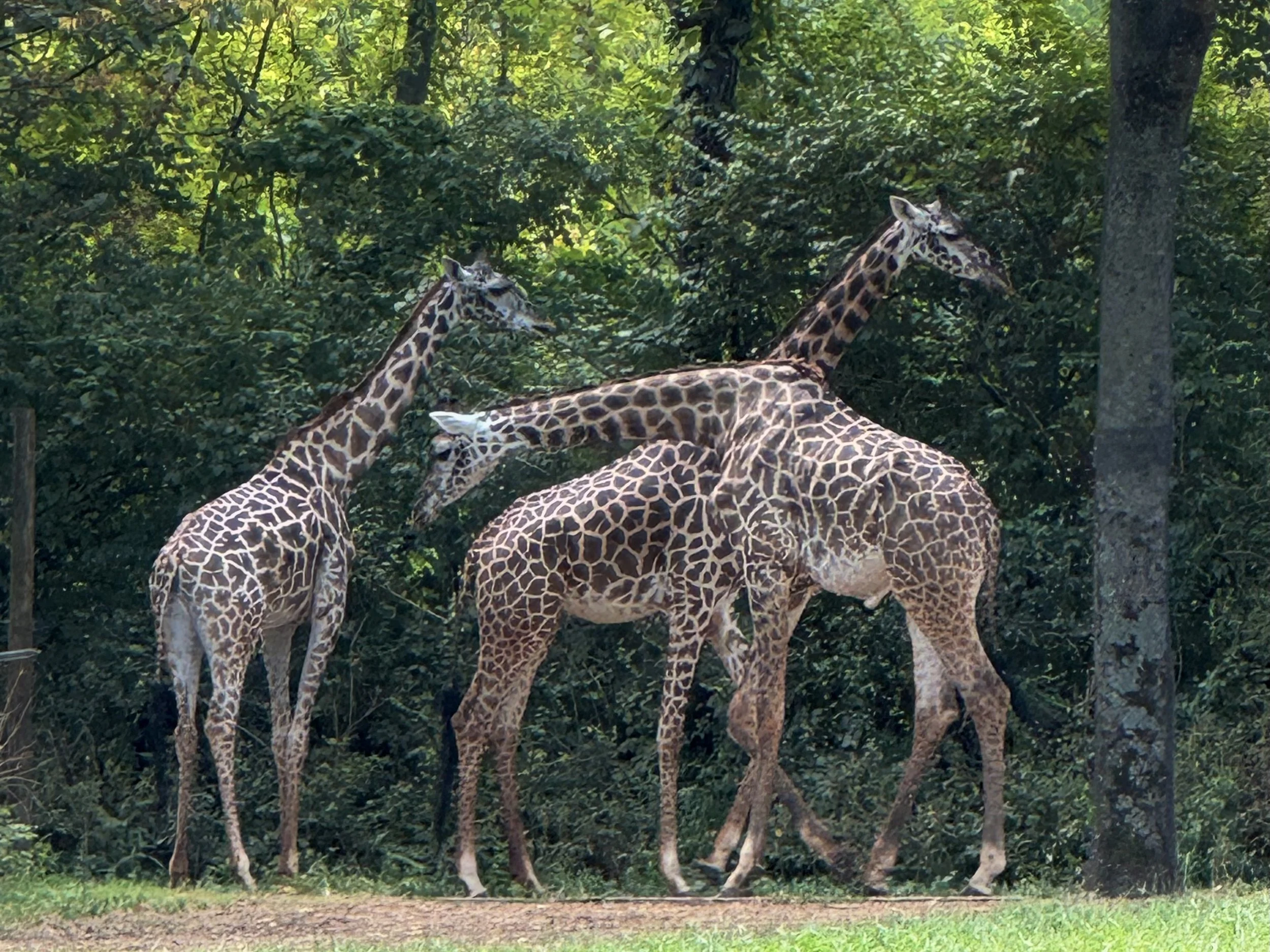
Leopard Forest was our first major stop of the day and immediately became one of my favorite areas of Nashville Zoo. The immersive pathway takes you past several primate species and smaller animals before leading to the Amur leopards, Masai giraffes and another viewing area for the zoo’s white rhinos.
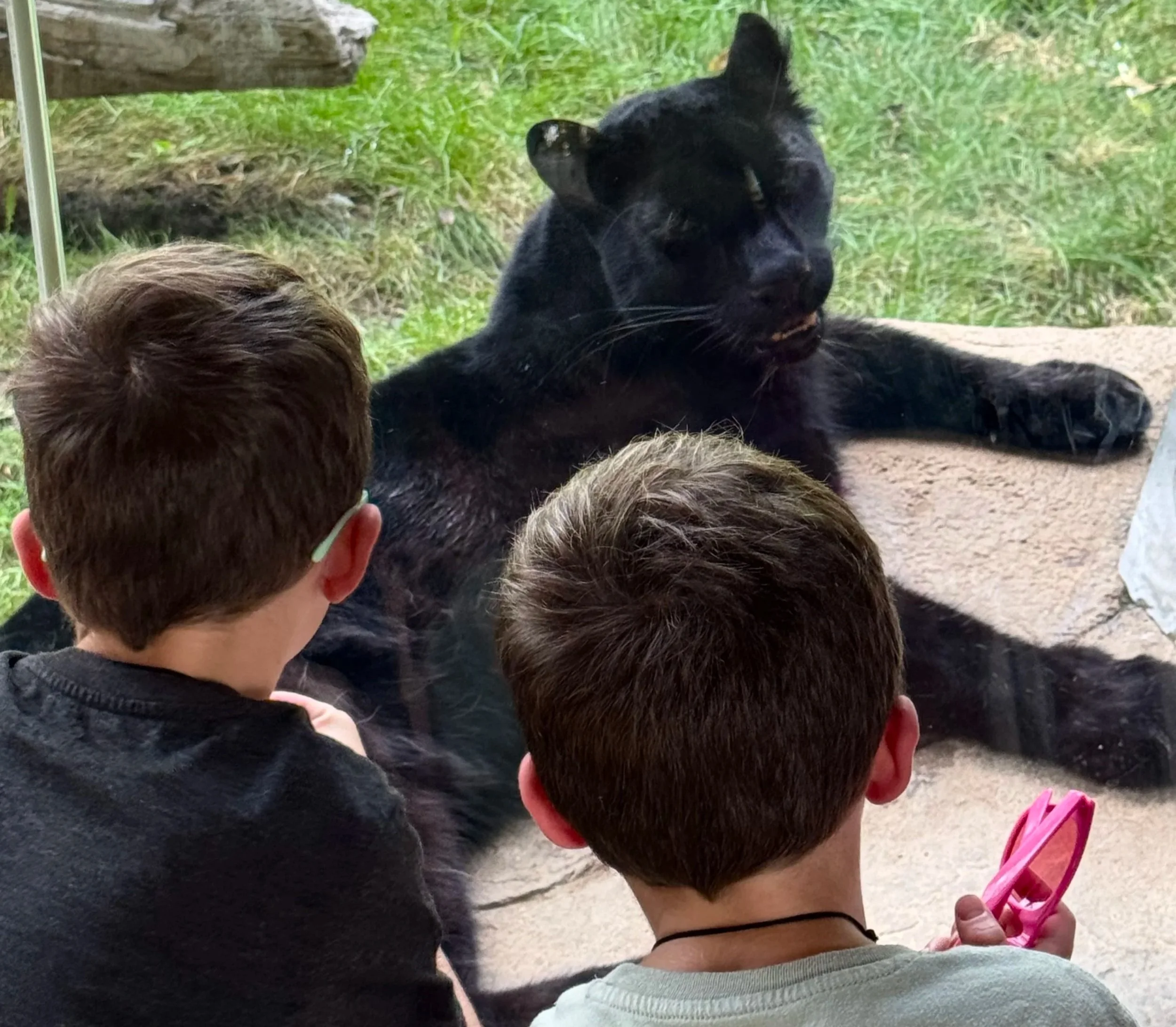
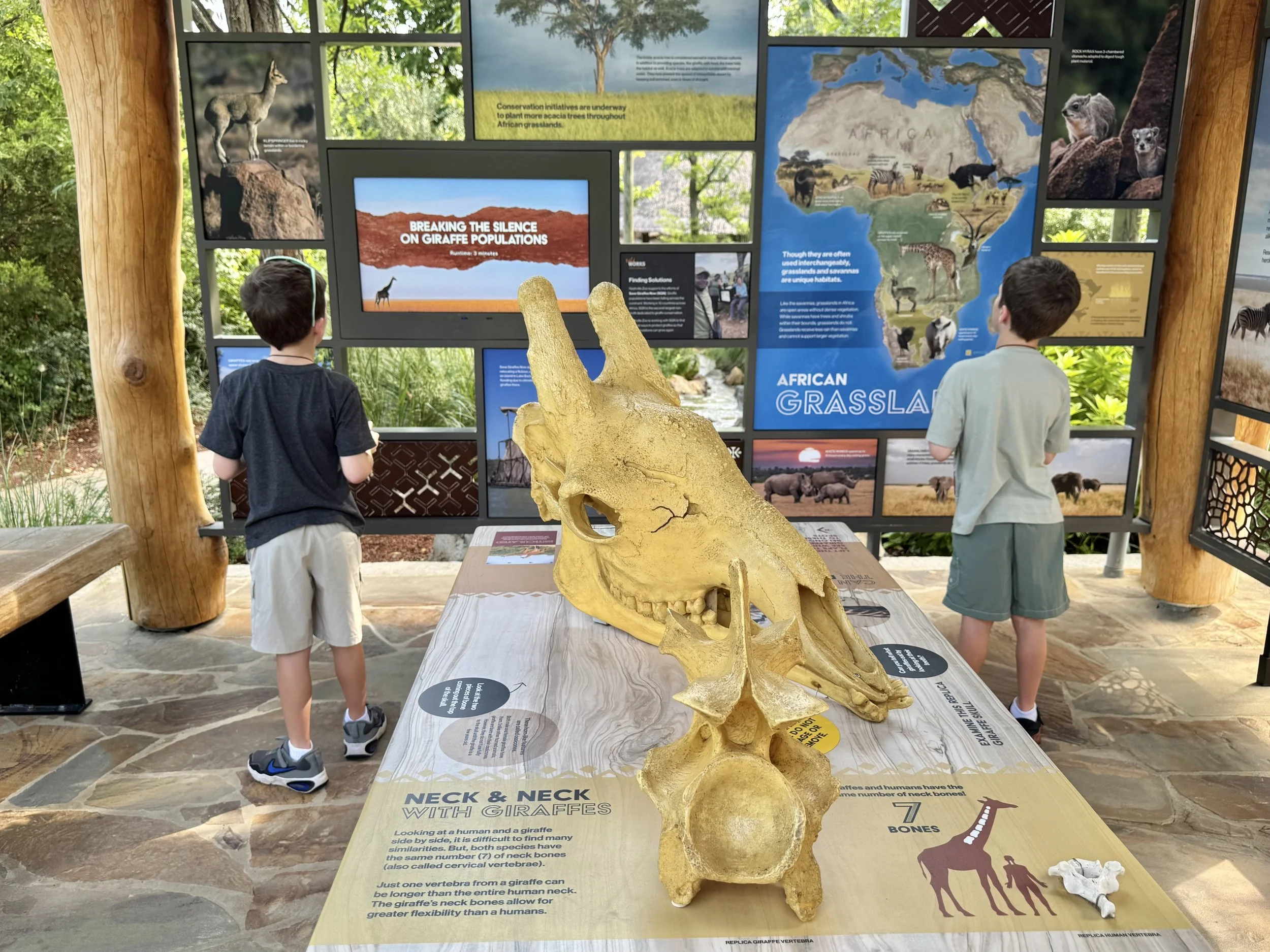
The giraffes were incredible to see up close, and we enjoyed learning more about them through the interactive displays near the end of the exhibit. However, one of the most memorable animals of the entire day was Roza, the zoo’s melanistic Amur leopard. Melanism is a genetic trait that gives her an unusually dark coat, making her appear almost entirely black. However, if the light hits her fur just right, you can still see her leopard spots. She was fascinating.
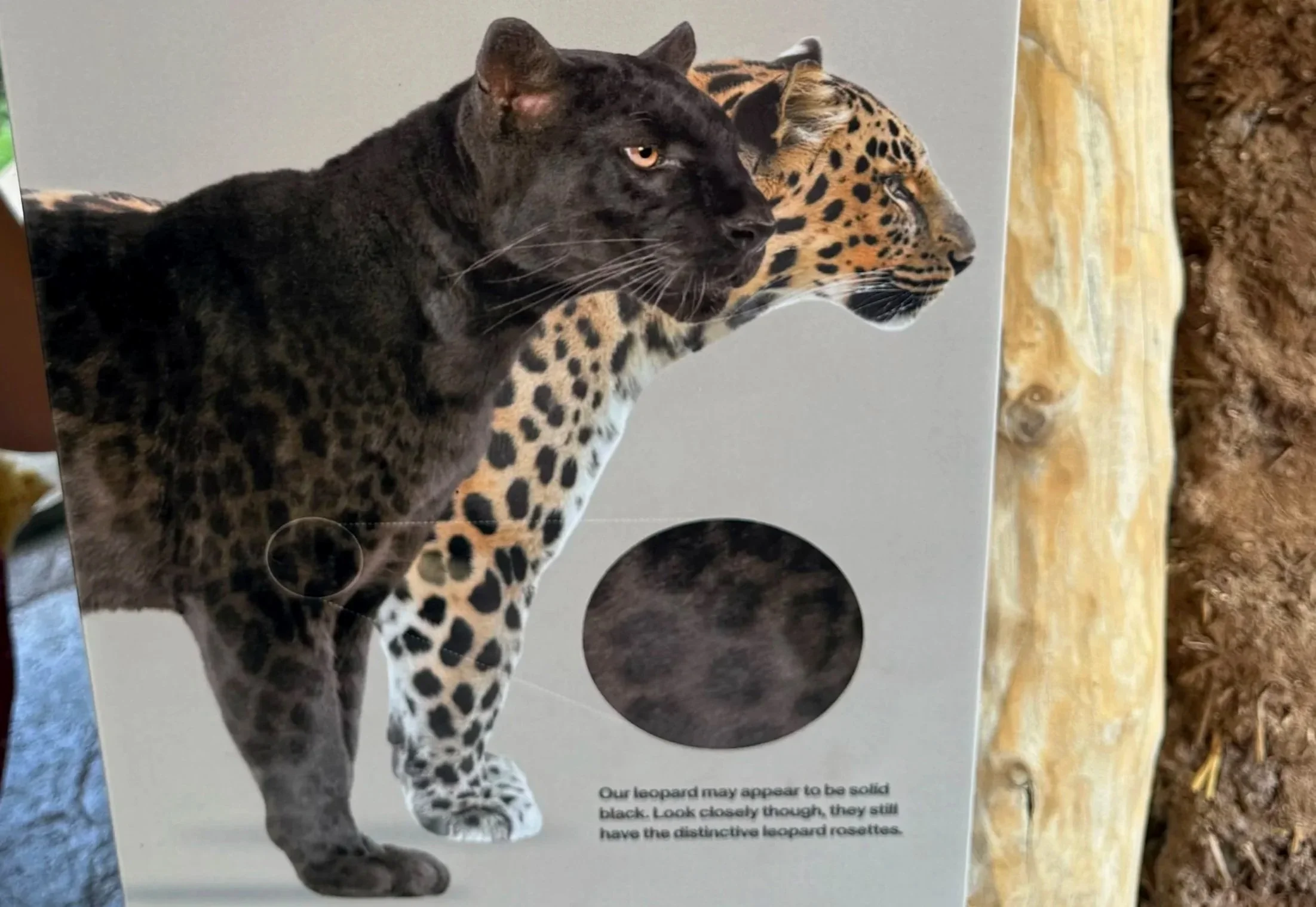
Leopard Forest also includes an overhead passage that allows the leopards to move above visitors on their way to the outdoor habitat. Roza rotates through the exhibit with the zoo’s other Amur leopards, so there is no guarantee she will be visible during every visit. We were lucky enough to spot her, and she even walked right up to the glass where we were standing, lay down and settled in for a nap!
🦎 Stop 2: Komodo Dragons and the Veterinary Center
🐾 Animals You May See: Komodo dragons and young animals receiving care inside the veterinary nursery
💛 My Highlight: Meeting three tiny rescued Mexican spider monkeys named Miso, Matcha and Mei
🔎 Don’t Miss: The nursery windows and treatment rooms where visitors may be able to observe the zoo’s veterinary team at work
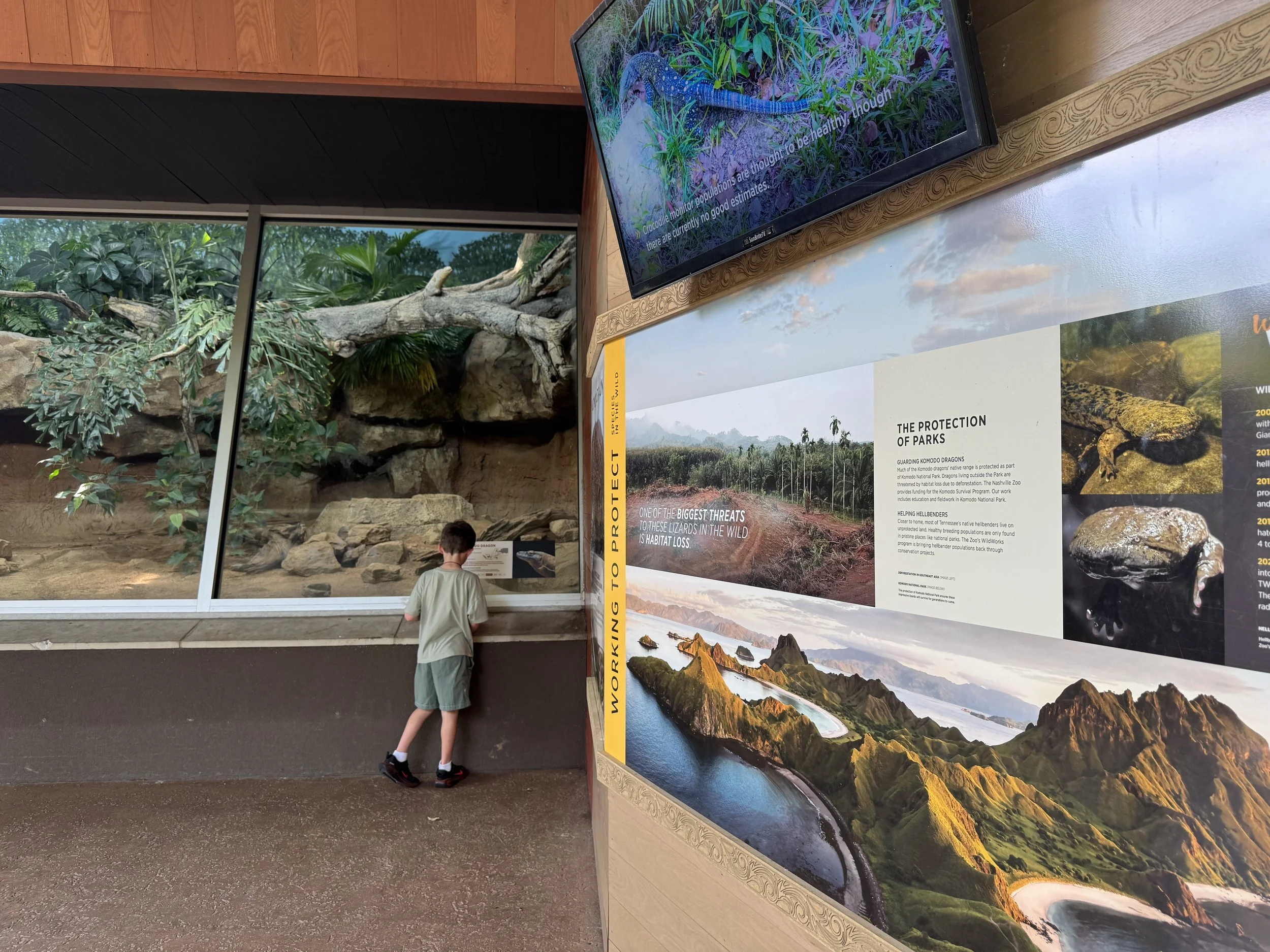
The pathway leading to the HCA Healthcare Veterinary Center takes you past the zoo’s Komodo dragon habitat. These enormous reptiles are the largest living lizards in the world and can grow up to 10 feet long and weigh more than 300 pounds.
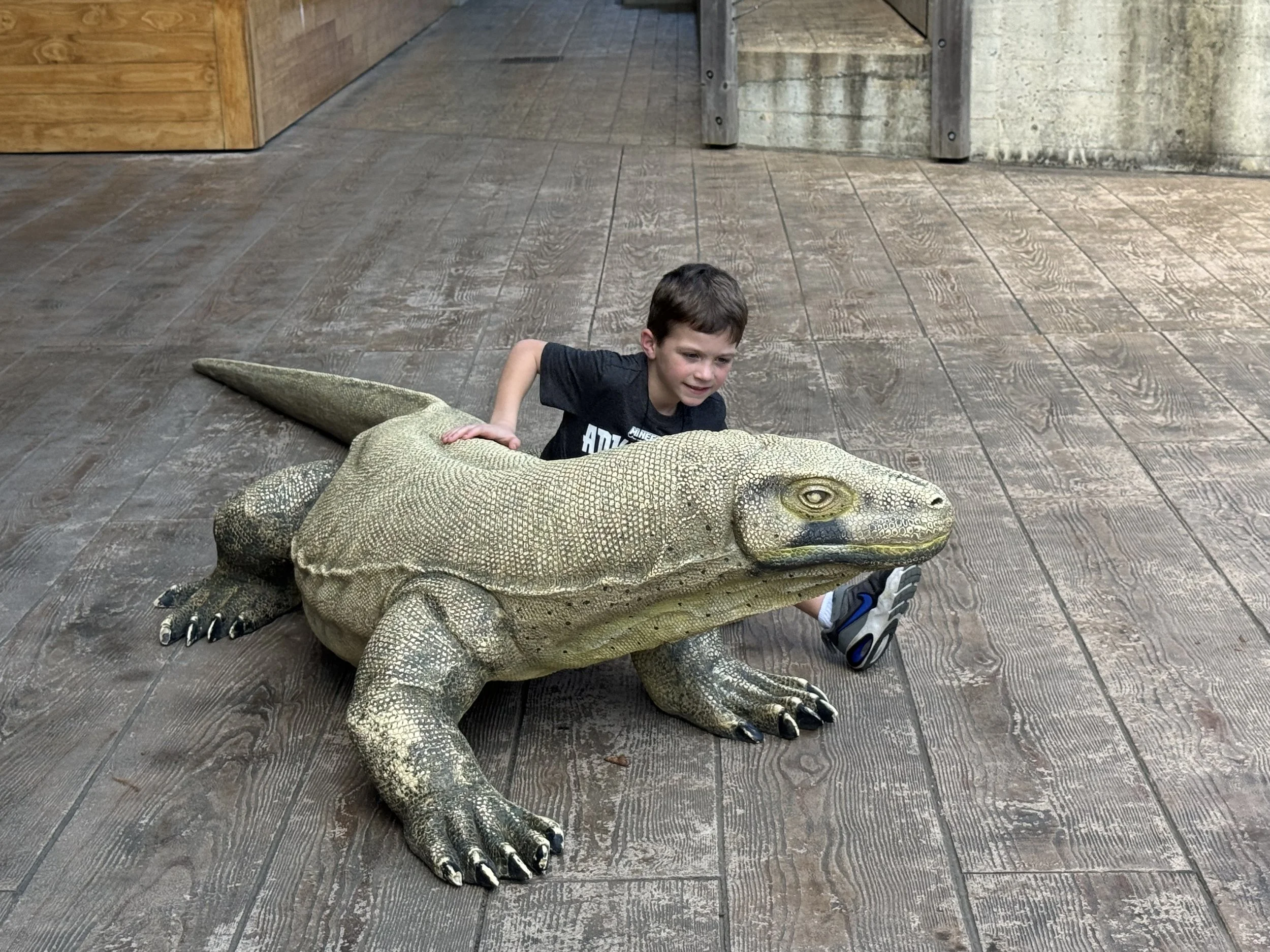
Despite what many people believe, Komodo dragons do not spit venom. Instead, glands in their lower jaws produce venom that enters a victim through their bite. Combined with approximately 60 serrated teeth, powerful muscles and surprising speed, it makes them extremely effective predators. Komodo dragons are native to only a small group of Indonesian islands and are classified as endangered.
The HCA Healthcare Veterinary Center gives visitors a fascinating look at how the zoo cares for its animals. Large viewing windows look into the nursery, examination areas and treatment rooms. Depending on what is happening during your visit, you may see young animals being cared for or even members of the veterinary team performing a procedure.
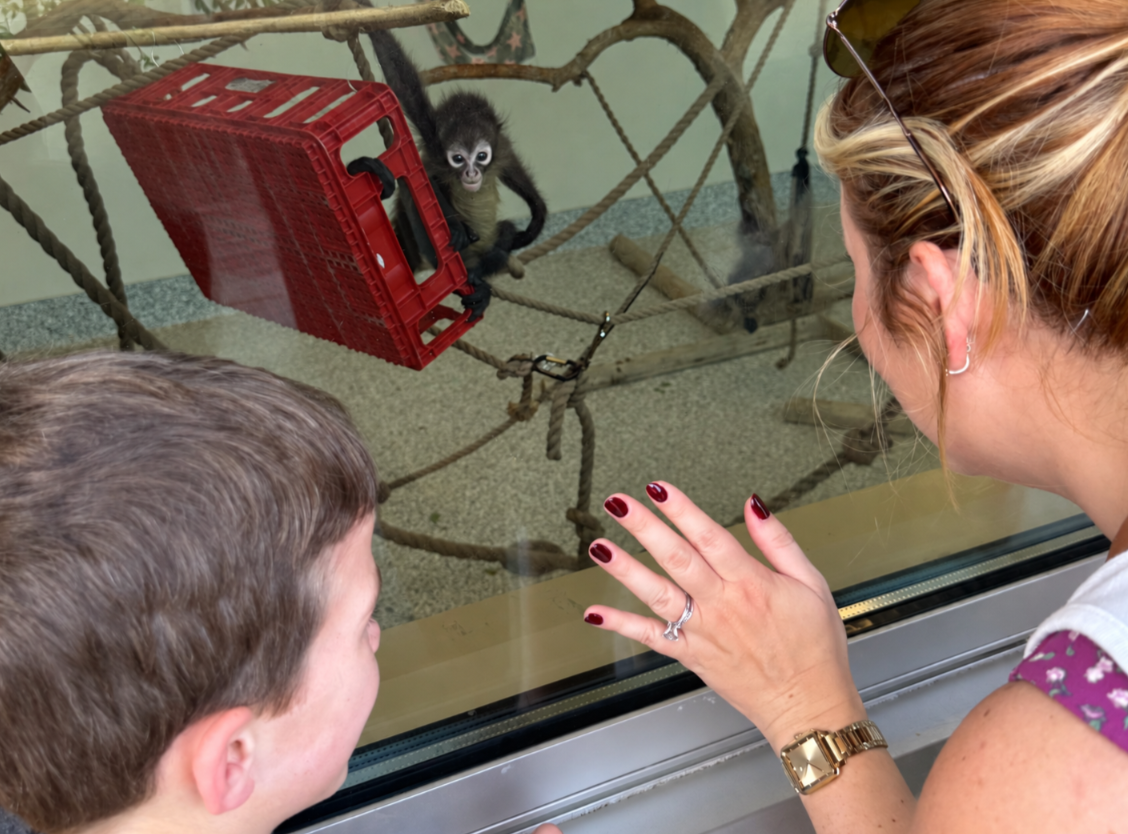
When we visited, we saw the tiniest Mexican spider monkeys named Miso, Matcha and Mei. The trio, one male and two females, were confiscated from the illegal wildlife pet trade after being taken from their mothers in the wild at an incredibly young age. They were transferred to Nashville Zoo so they could receive specialized care and grow up with companions of their own species. Their story was heartbreaking, but they were absolutely adorable.
The zoo’s Today at the Zoo calendar lists scheduled keeper talks and occasional animal encounters at the Veterinary Center. However, the zoo does not appear to publish a regular schedule of surgeries or guarantee which animals will be visible in the nursery. New arrivals are often announced through the zoo’s website, blog and social media, so check those before your visit.
🛝 Stop 3: Jungle Gym, Face Painting and Lunch
🎡 What You’ll Find: A 66,000-square-foot playground, towering treehouse, giant snake tunnel, slides, swings, kid-sized zip lines and a koi pond
💛 My Highlights: Watching the kids race through the Jungle Gym and seeing how much they loved the koi pond
🔎 Don’t Miss: The giant snake tunnel and the face-painting station located near the playground
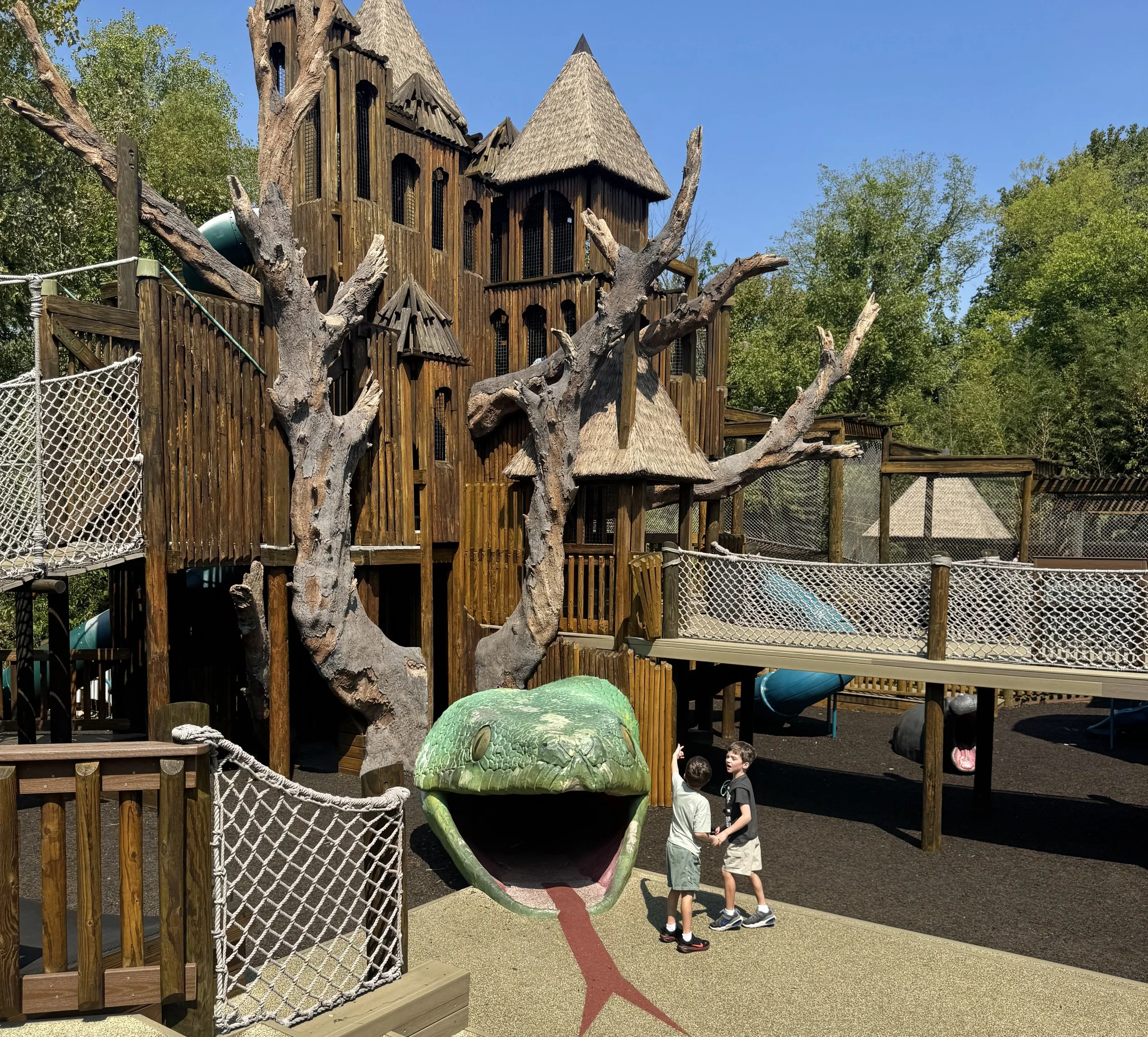
The Jungle Gym was surprisingly one of the biggest hits of our day. Apparently, the boys insist on stopping every time they visit. It is much more than a typical playground, with multiple levels, climbing structures, slides, swings, kid-sized zip lines and an enormous snake children can climb inside. The boys could have easily spent hours there.
If your kids notice the playground early, expect to stay awhile. Instead of treating it as a quick stop, I suggest using it as a designated midday play and lunch break before continuing through the zoo. We stopped for pizza from the nearby Screaming Gibbon Pizza Kitchen and ate while the kids took a break from exploring.
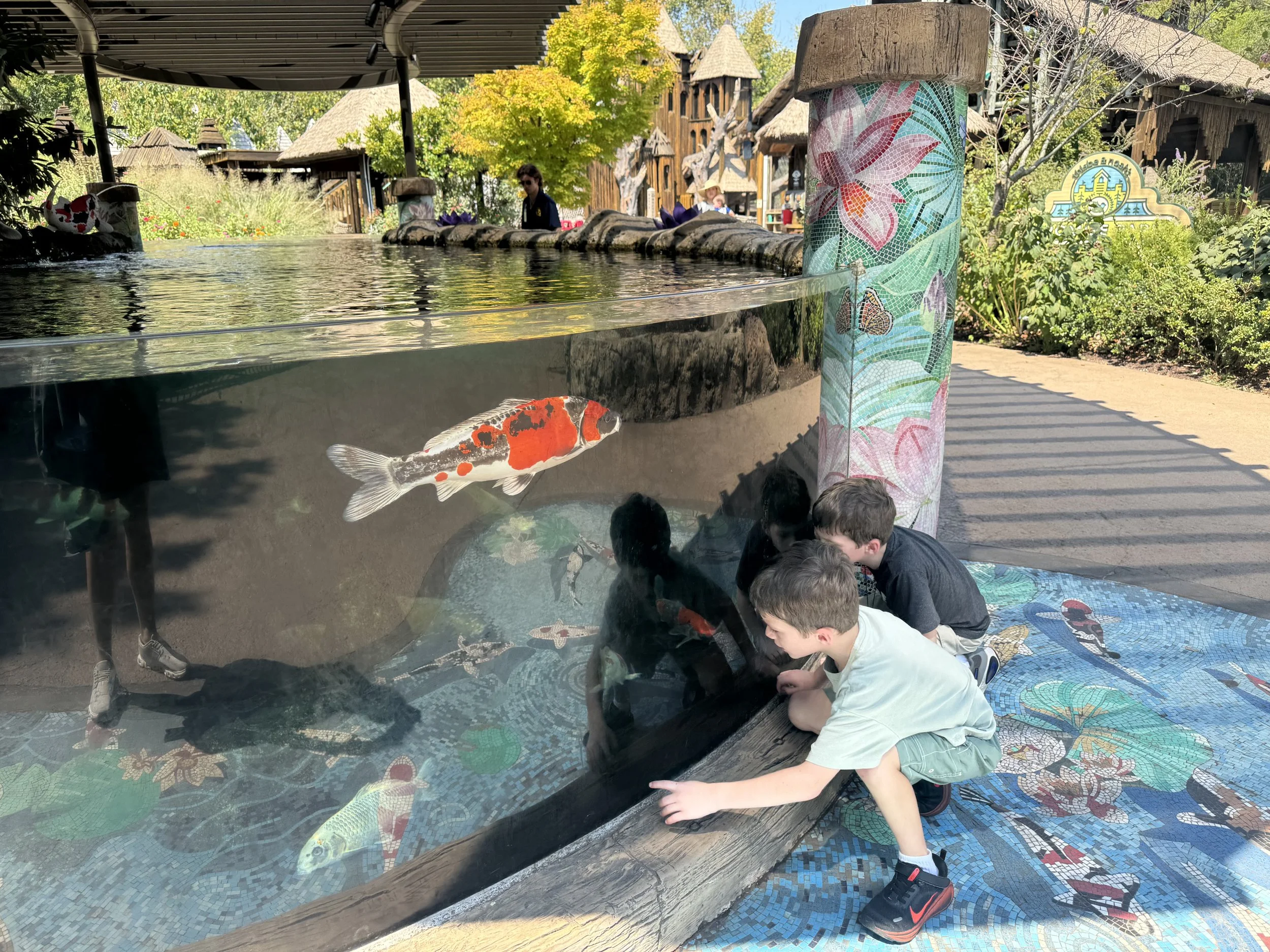
A koi pond and face-painting station are also located in this area. The koi pond has transparent viewing panels at the children’s level, allowing them to crouch down and watch the giant fish swim underwater. The boys loved it.
It’s important to know that face-painting prices vary depending on the design. During a previous visit for the twins
During a previous visit for the twins’ birthday, my daughter was told that face painting was $10 per child, so she offered to treat all the kids. Naturally, everyone chose a full-face design with elaborate artwork. When she went to pay, she discovered that prices actually “start” at $10, turning it into a much more expensive birthday surprise than she expected!
✨ Pro Tip: Playground equipment can become surprisingly hot in the afternoon sun. Check slides, climbing surfaces and other equipment with your hand before letting young children climb on them, especially during the summer.
🦅 Stop 4: Soaring Eagle Zip Line and Other Ticketed Attractions
🎟️ Ticketed Attractions: Soaring Eagle Zip Line, Wild Animal Carousel, Wilderness Express Train, Adventure 4D Theater and Lorikeet Landing feeding
💛 My Highlight: Listening to the kids screaming and laughing with delight as we soared above the zoo
🔎 Don’t Miss: The bird’s-eye views of the giraffes, rhinos and zoo grounds from the Soaring Eagle Zip Line
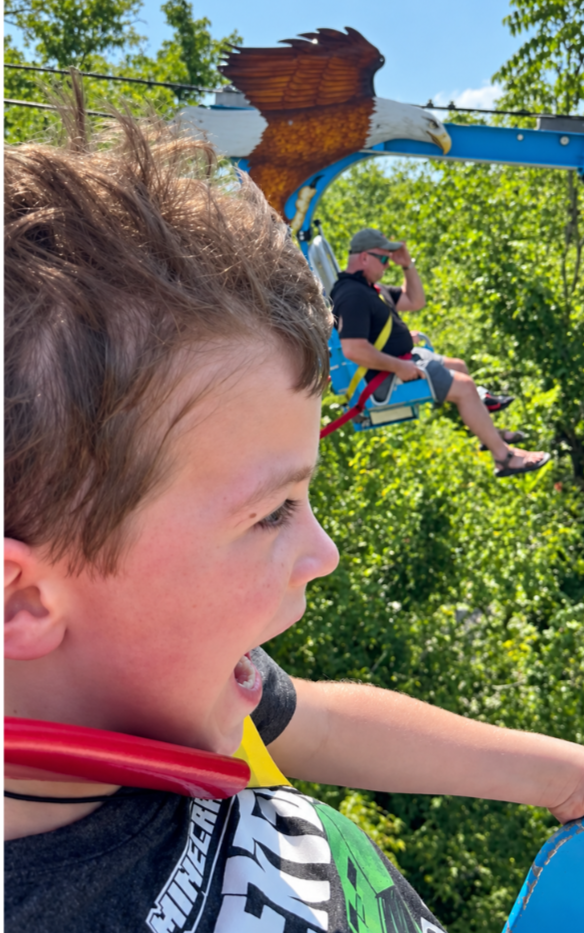
The Soaring Eagle Zip Line was not optional in the boys’ minds, or mine. It was one of our must-do attractions, and we absolutely loved it. The ride slowly pulls you backward and upward until you are approximately 110 feet above the ground. Then it releases, sending you soaring back toward the zoo at speeds of up to 28 miles per hour.
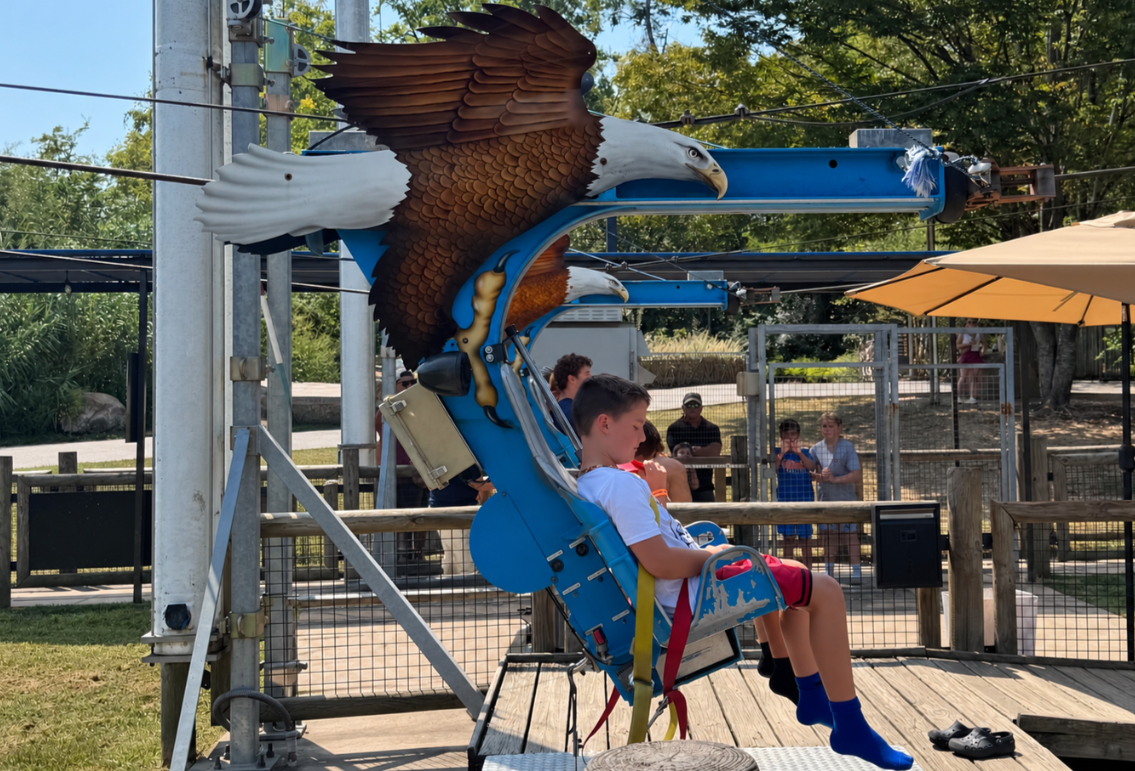
The climb builds just enough suspense, followed by a rush that feels like a real adventure without being overly intense for our adventurous 6-year-olds. From the top, you can look down over the giraffes, rhinos and surrounding zoo grounds. Enjoy the view while you can because once the ride releases, the excitement of the return trip quickly takes over!
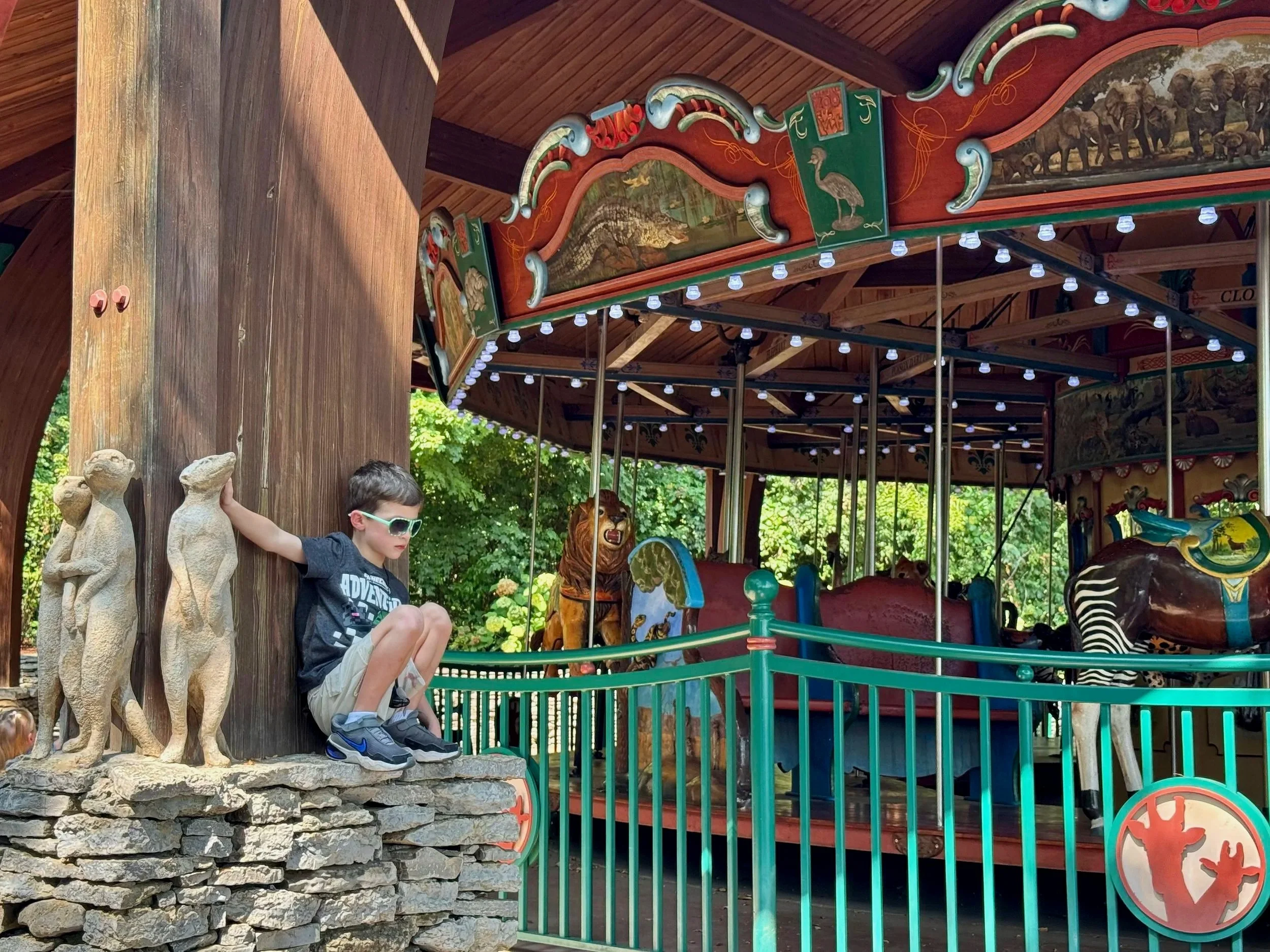
Younger children may enjoy taking a short journey through the woods aboard the Wilderness Express Train or riding one of the Wild Animal Carousel’s 39 colorful, hand-carved animals. The carousel’s detailed carvings give it a vintage charm and the pavilion features work by Zsolt Hormay, a master carver who helped create the Tree of Life at Disney’s Animal Kingdom.
Another fun thing to do is step inside the Adventure 4D Theater where moving images combine with effects such as wind, mist and bubbles to make you feel like you are soaring directly through the action on the screen. It’s far more immersive than simply watching a movie and can be fun for both children and adults.
You can also walk through Lorikeet Landing, where dozens of brightly colored birds flutter overhead and swoop surprisingly close. Purchase a small cup of nectar and hold it out while the lorikeets drink. If you’re lucky, one may perch on your hand or arm while it feeds. Walking through the aviary is free, but the nectar requires an additional ticket.
✨ Pro Tip: Compare individual attraction prices with the one-day Adventure Pass if your family plans to do more than one activity. The pass may also be the better value if your kids want to ride a favorite attraction repeatedly. We watched a group of about six boys get back in line for the Soaring Eagle over and over again. They certainly appeared to be getting their money’s worth!
🐍 Stop 5: Unseen New World and the Aviary
🐾 Animals You May See: Snakes, frogs, salamanders, fish, bats and colorful birds from around the world
💛 My Highlights: Cooling off while exploring the indoor exhibits and turning the aviary into a scavenger hunt with the twins
🔎 Don’t Miss: Pick up a bird-identification guide before entering the aviary and see how many species your family can find
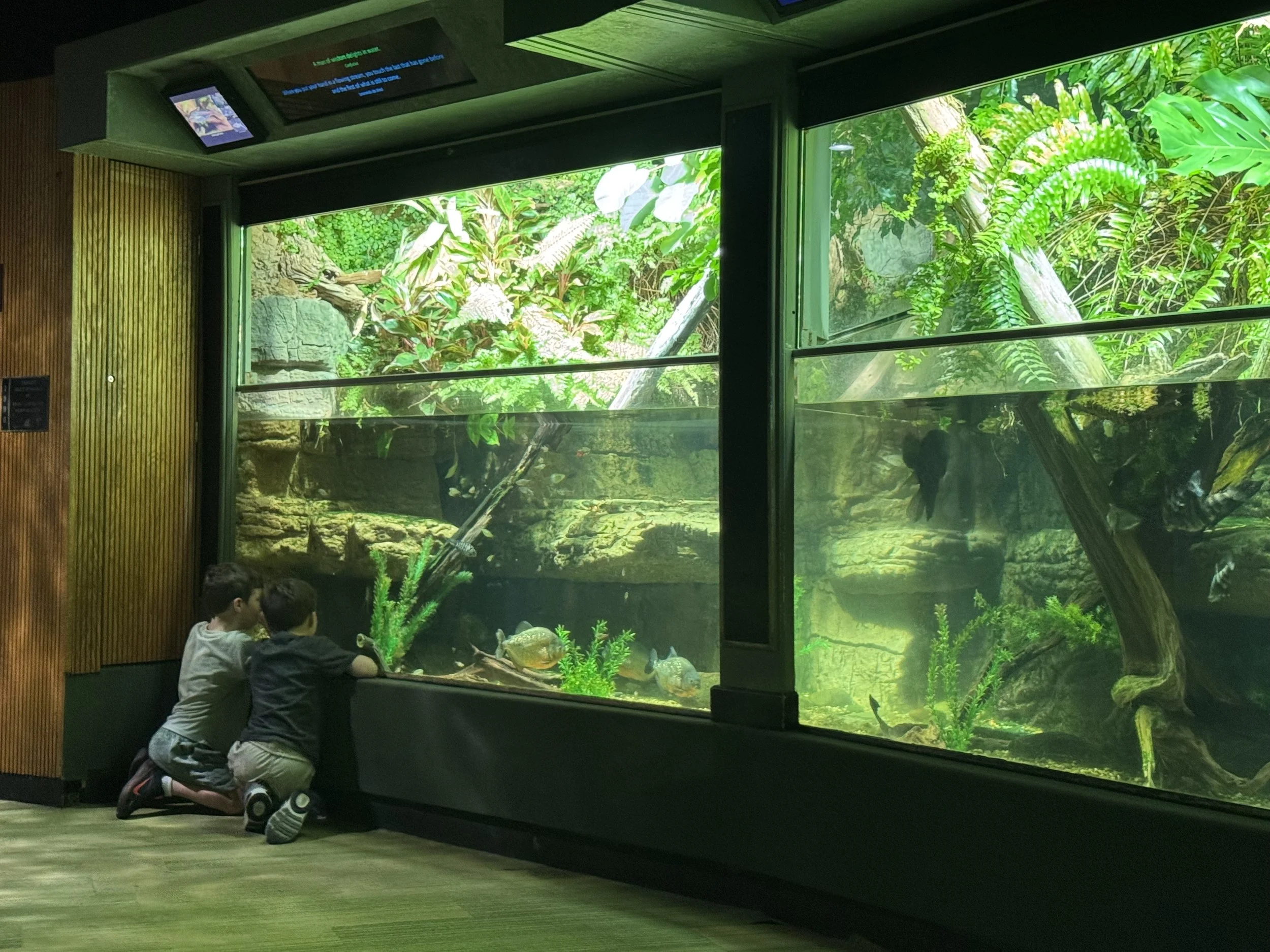
After several hours outside, stepping into Unseen New World felt like discovering a hidden oasis. The air-conditioned building is filled with animals that are easy to overlook elsewhere, including snakes, frogs, salamanders, fish and bats. Dim lighting and exhibits built into the walls give it the feeling of entering a completely different world.
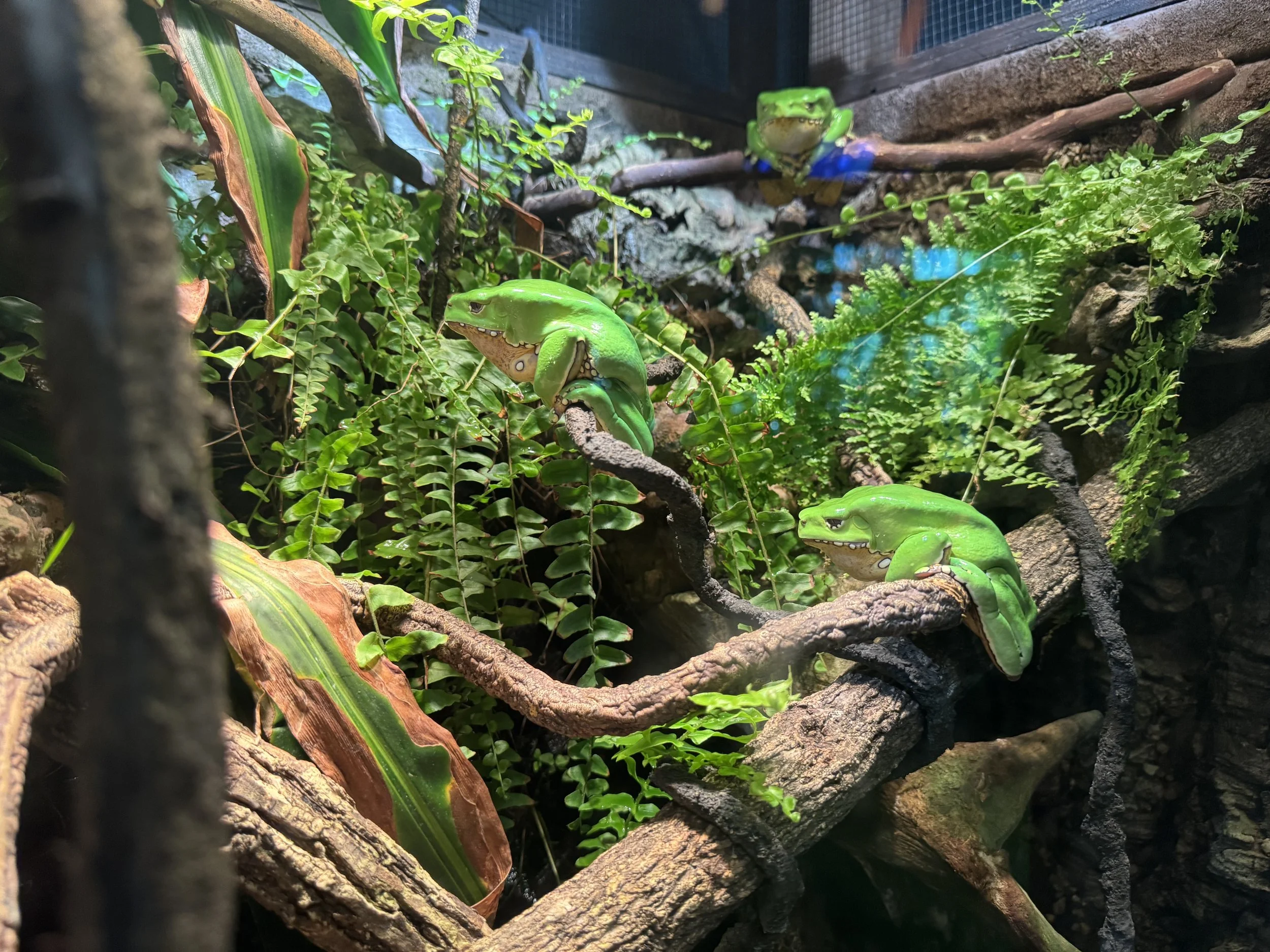
The indoor location also makes this one of the best places to slow down. Instead of rushing through, give everyone time to explore the smaller exhibits while enjoying a break from the sun.
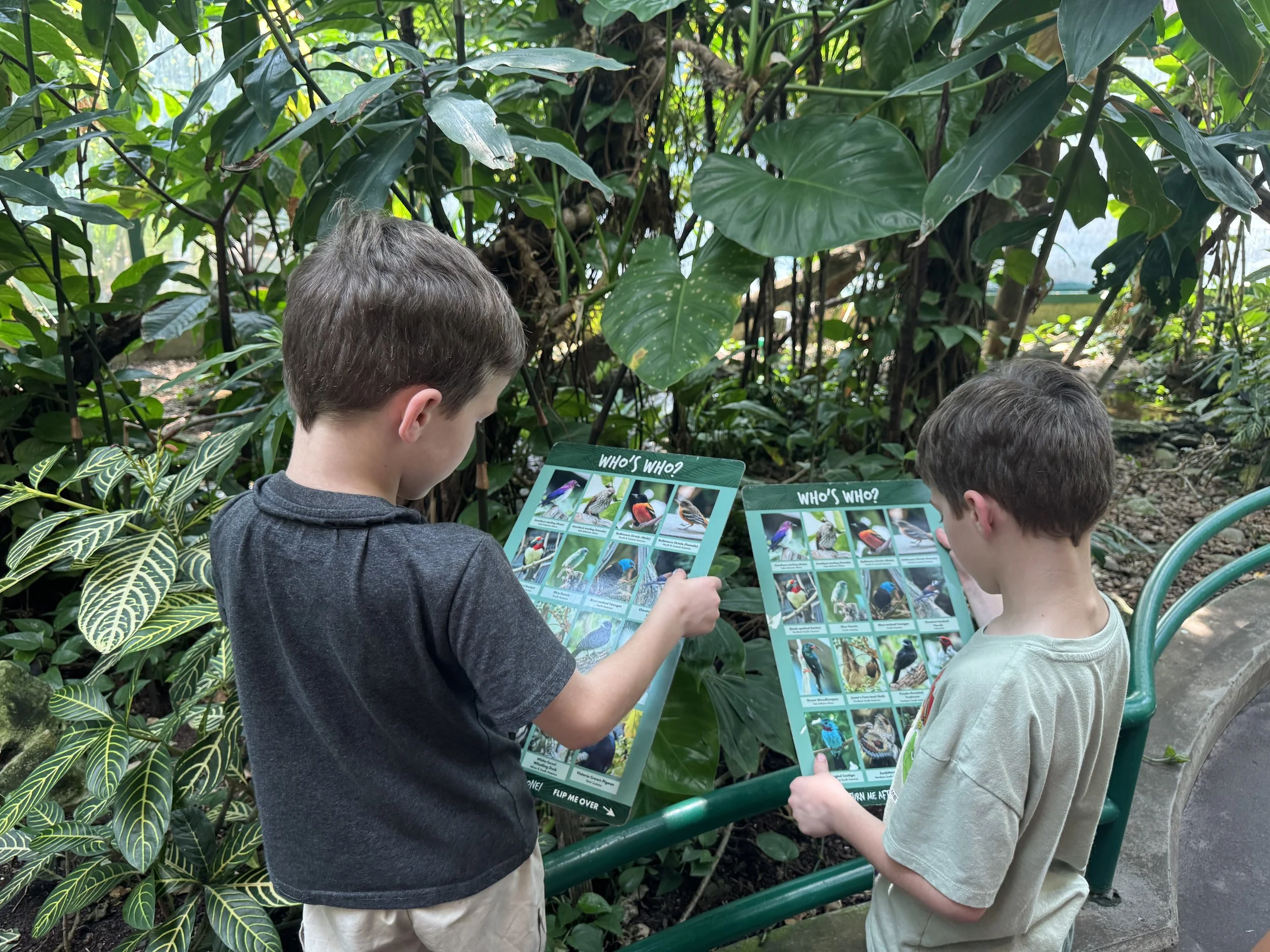
The walk-through aviary was especially fun with the twins. We picked up a bird-identification guide and turned our visit into a scavenger hunt, searching among the trees for colorful tanagers, fruitcrows, crowned pigeons and other birds. Some were easy to spot, while others blended so well into the leaves that finding them felt like a small victory.
Our most memorable bird encounter was not on the guide. A crow landed right beside us with a baby rat in its mouth and proceeded to swallow it whole. The twins were absolutely delighted. The adults were considerably less enthusiastic! It was an unexpected reminder that nature does not always follow the family-friendly script.
✨ Pro Tip: Don’t just look at eye level inside the aviary. Check the treetops, branches, ground and areas above the pathway. Some of the most interesting birds are hiding in places you might otherwise walk right past.
🦘 Stop 6: Cassowary and Kangaroo Kickabout
🐾 Animals You May See: Double-wattled cassowaries, red kangaroos and tawny frogmouths
💛 My Highlight: Watching the twins gently pet a kangaroo just inches from the walkway
🔎 Don’t Miss: Look closely for joeys peeking from their mothers’ pouches
Before entering Kangaroo Kickabout, look for the double-wattled cassowaries across the pathway. These enormous, almost prehistoric-looking birds are second in size only to ostriches. Their helmet-like casques, bright blue necks and dangling red wattles make them look like creatures that somehow wandered out of the age of dinosaurs. We found one casually relaxing beside a small kiddie pool and couldn’t believe how massive it was.
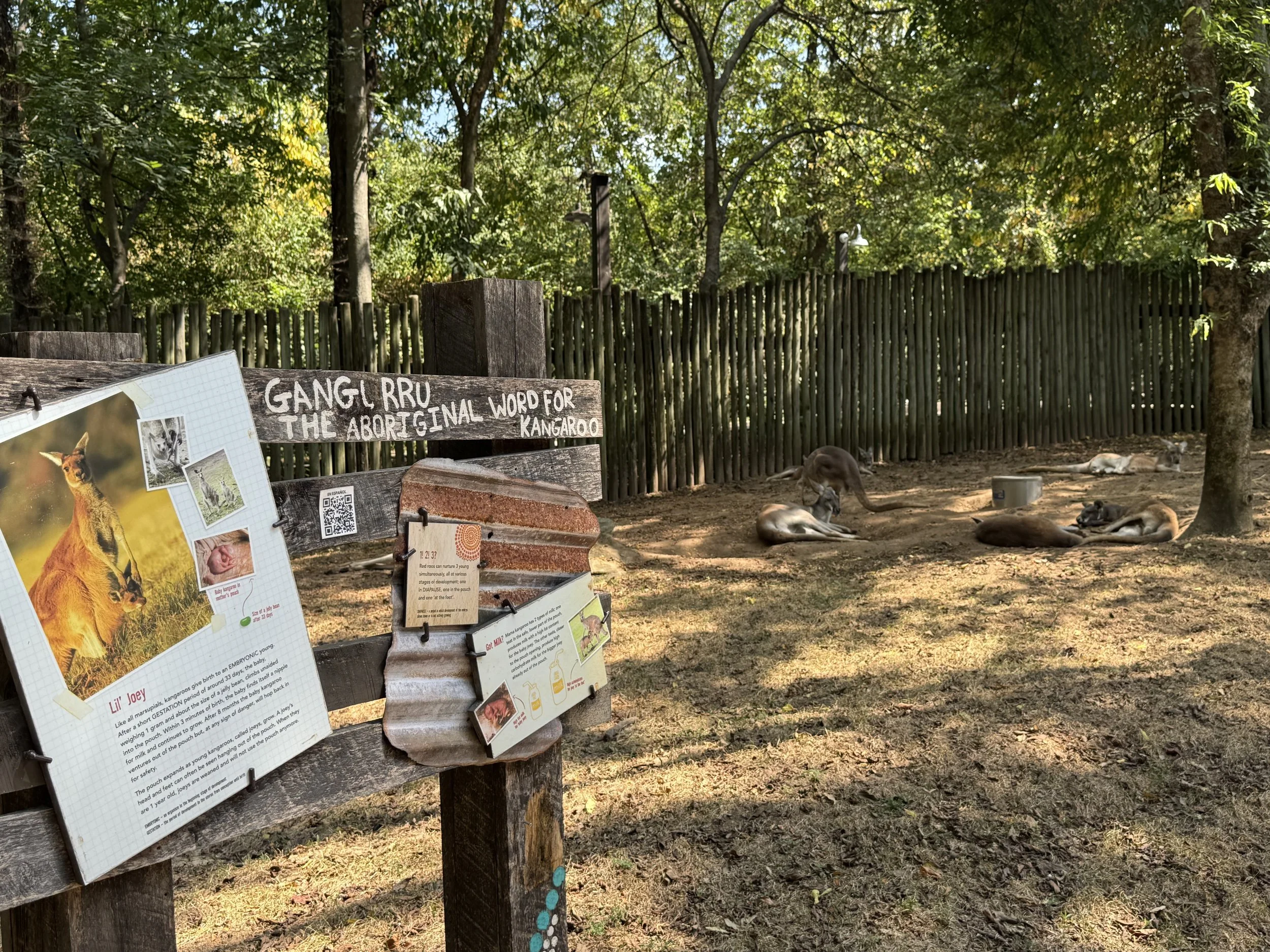
Kangaroo Kickabout was easily one of our favorite experiences of the day. Instead of peering through a fence, you walk directly through the red kangaroos’ habitat along a designated pathway. The kangaroos are free to go wherever they please, so one might be lounging a few feet away while another suddenly hops across the trail in front of you.
During one of the twins’ previous visits, a particularly energetic kangaroo began zigzagging through the habitat and sending visitors scrambling out of its way. According to my daughter, it was chaos in the most entertaining way possible. The kangaroo appeared to be having the time of its life, and naturally, so were the boys.
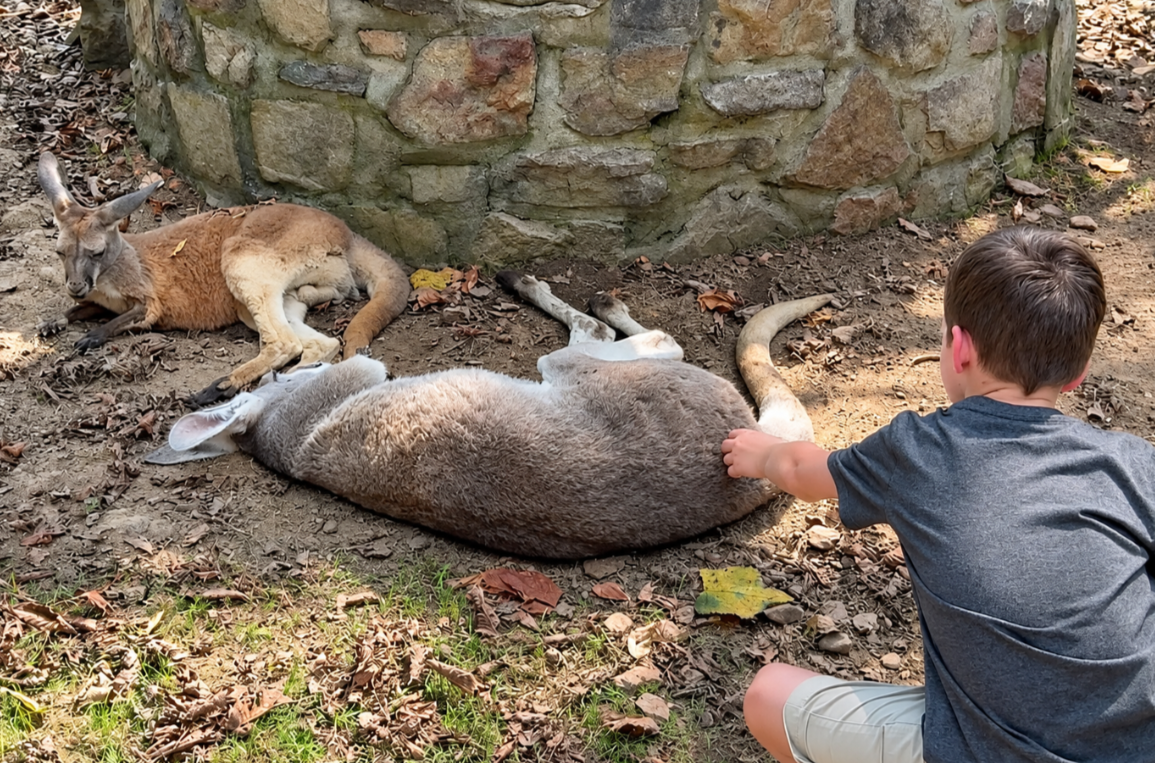
Things were much calmer during our visit. One kangaroo was resting beside the trail with only its feet extending onto the walkway. Guests must remain on the path and can only touch the animals when a staff member allows it. Since its feet were on the trail, the boys were permitted to stay on the walkway, gently reach over and pet it. Seeing a kangaroo this close was exciting enough. Actually being able to touch one made the experience unforgettable.
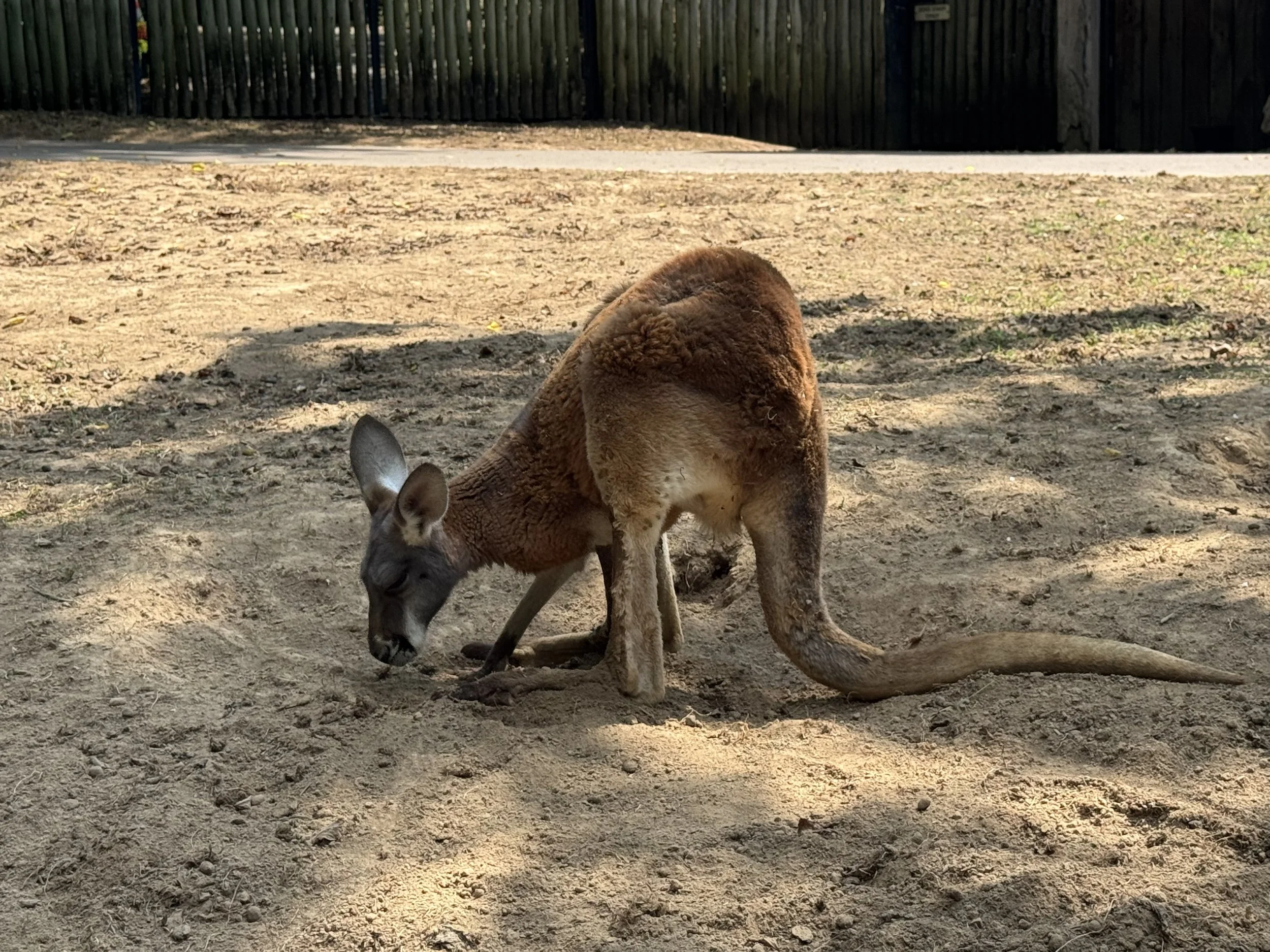
Red kangaroos may look completely relaxed while stretched out beside the trail, but don’t let their lounging fool you. They are the largest marsupials in the world, can travel up to 40 miles per hour and may leap as far as 30 feet in a single bound. After hearing about the runaway kangaroo from the twins’ earlier visit, those statistics suddenly felt much easier to imagine!
✨ Pro Tip: Check the day’s schedule for a Kangaroo Meet & Greet or keeper talk. You can walk through the habitat without attending a scheduled program, but the opportunity to touch a kangaroo depends entirely on where the animals choose to rest and the staff’s direction.
🦓 Stop 7: African Field and Zebras
🐾 Animals You May See: Grant’s zebras and other African animals sharing or surrounding the open habitat
💛 My Highlight: Watching several zebras wander together before continuing toward Tiger Crossroads
🔎 Don’t Miss: Looking closely at their stripe patterns because every zebra has its own unique design
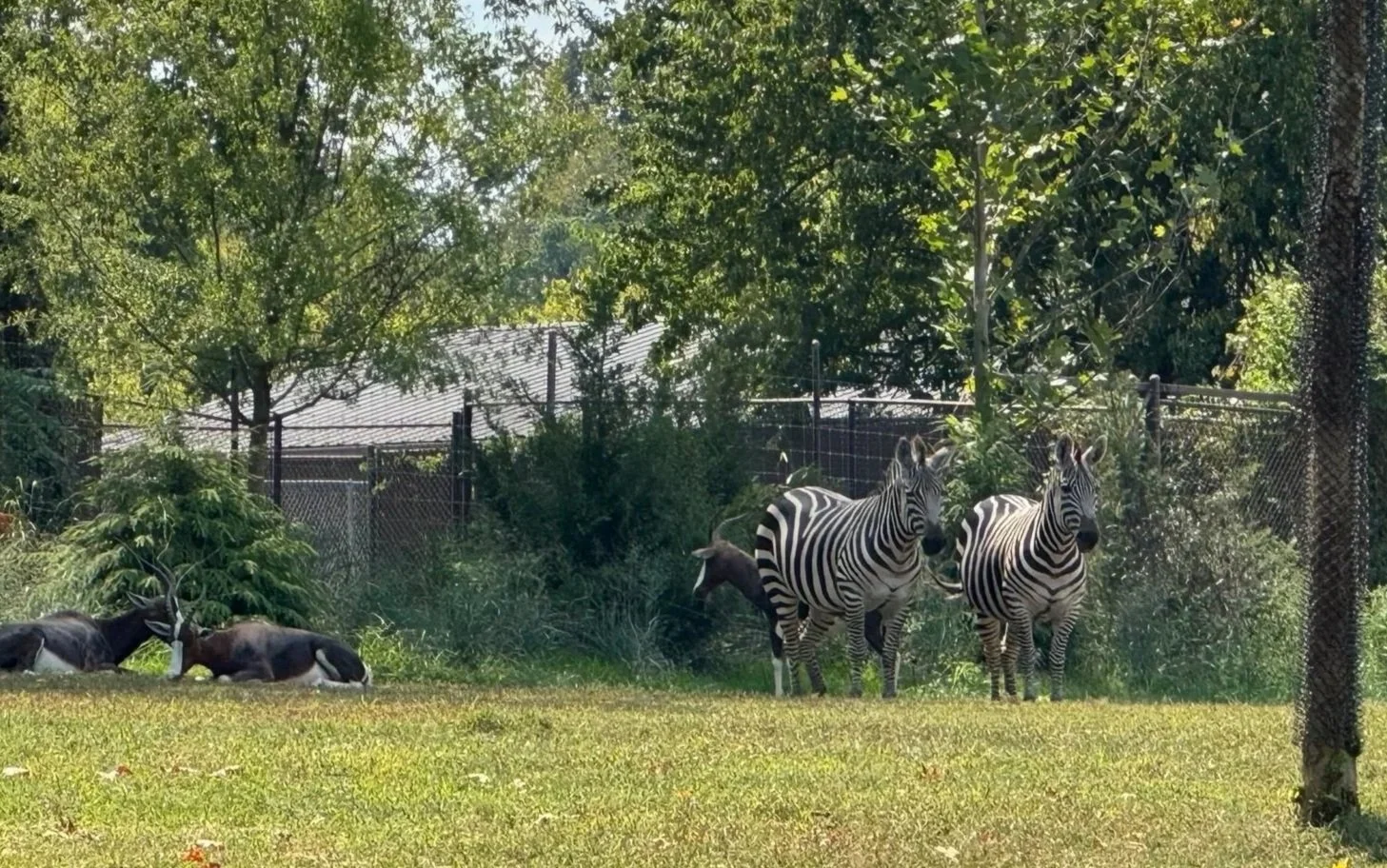
Just before reaching Tiger Crossroads, we passed the zoo’s African Field and stopped to watch a group of Grant’s zebras. After several enclosed and shaded exhibits, this area feels much more open, giving the zebras room to wander together across the grass.
Zebras may look nearly identical from a distance, but no two have exactly the same stripe pattern. Their stripes are as individual as human fingerprints, so take a moment to compare them when several are standing together. We saw quite a few during our visit, making this much more than a quick glimpse of a single zebra.
The area is also home to ostriches, elands, bonteboks and several other antelope species. Because these animals share such a large, open habitat, what you see and how close they wander will likely be different during each visit. We spotted quite a few animals here, although the zebras immediately captured our attention.
🐅 Stop 8: Tiger Crossroads
🐾 Animals You May See: Critically endangered Sumatran tigers
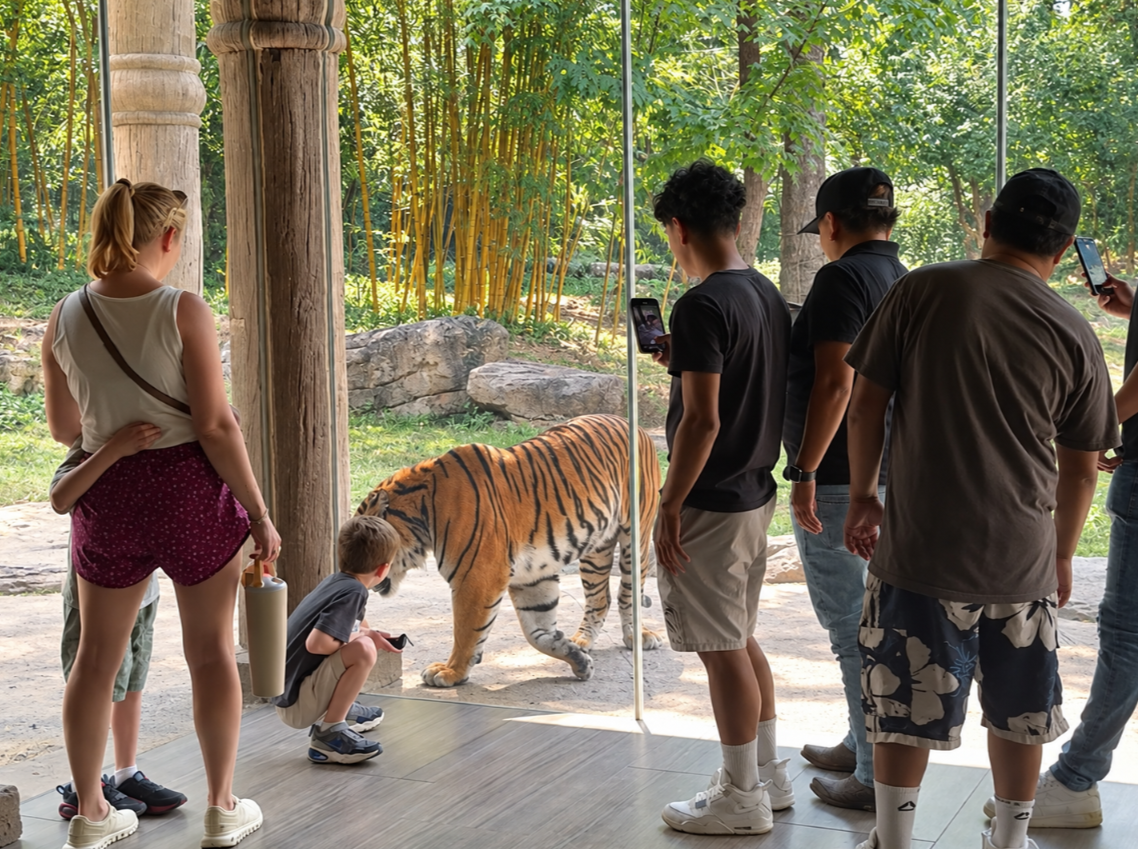
💛 My Highlight: Watching a tiger come right up to the glass and stare intensely into one of the twins’ eyes
🔎 Don’t Miss: The air-conditioned indoor viewing room, where a wall of glass can place you only inches from a tiger
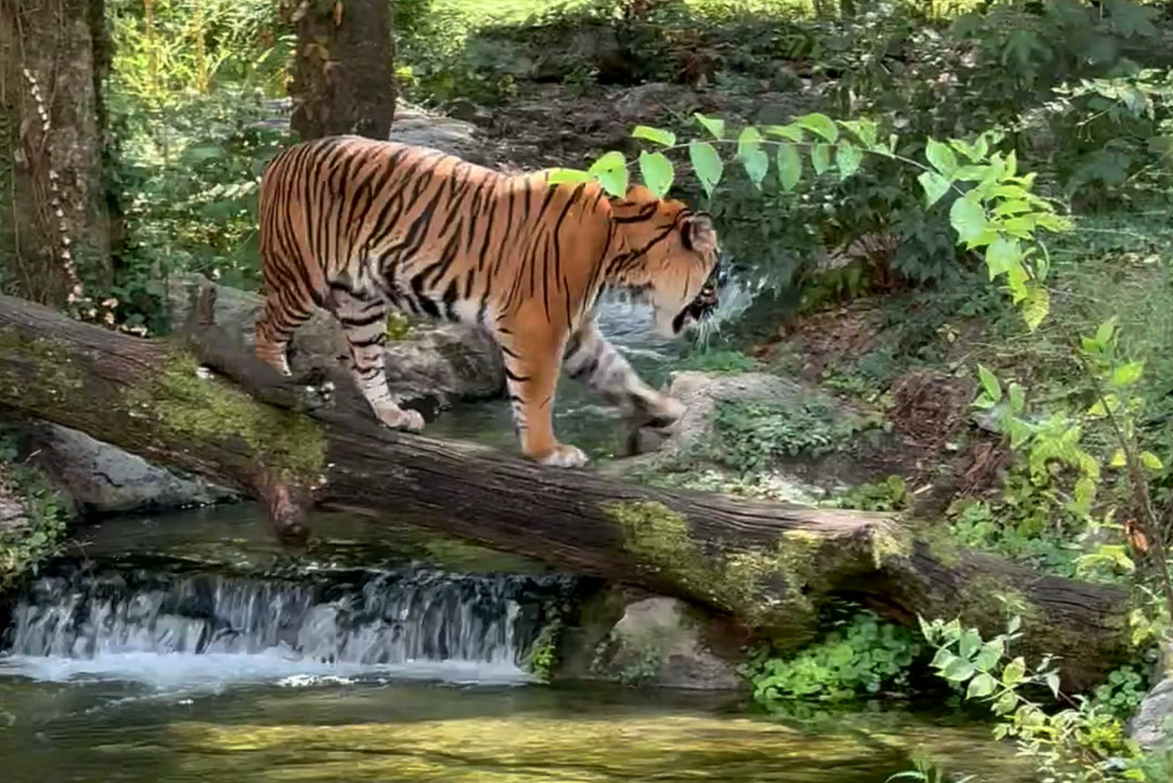
Tiger Crossroads gave us one of the most exciting encounters of our entire day. The tiger was massive, quite stunning and incredibly active. We watched as it prowled through the habitat, crossed the water along a fallen log and eventually made its way directly toward the viewing window.
One of the twins was standing near the glass when the tiger walked up and locked eyes with him. For several long seconds, it stared so intensely that the rest of the room seemed to disappear. He suddenly turned toward his mom with a panicked expression that seemed to say, “This tiger is staring directly into my soul!” We were completely safe behind the glass, of course, but at that distance, it was easy to understand why the encounter startled him.
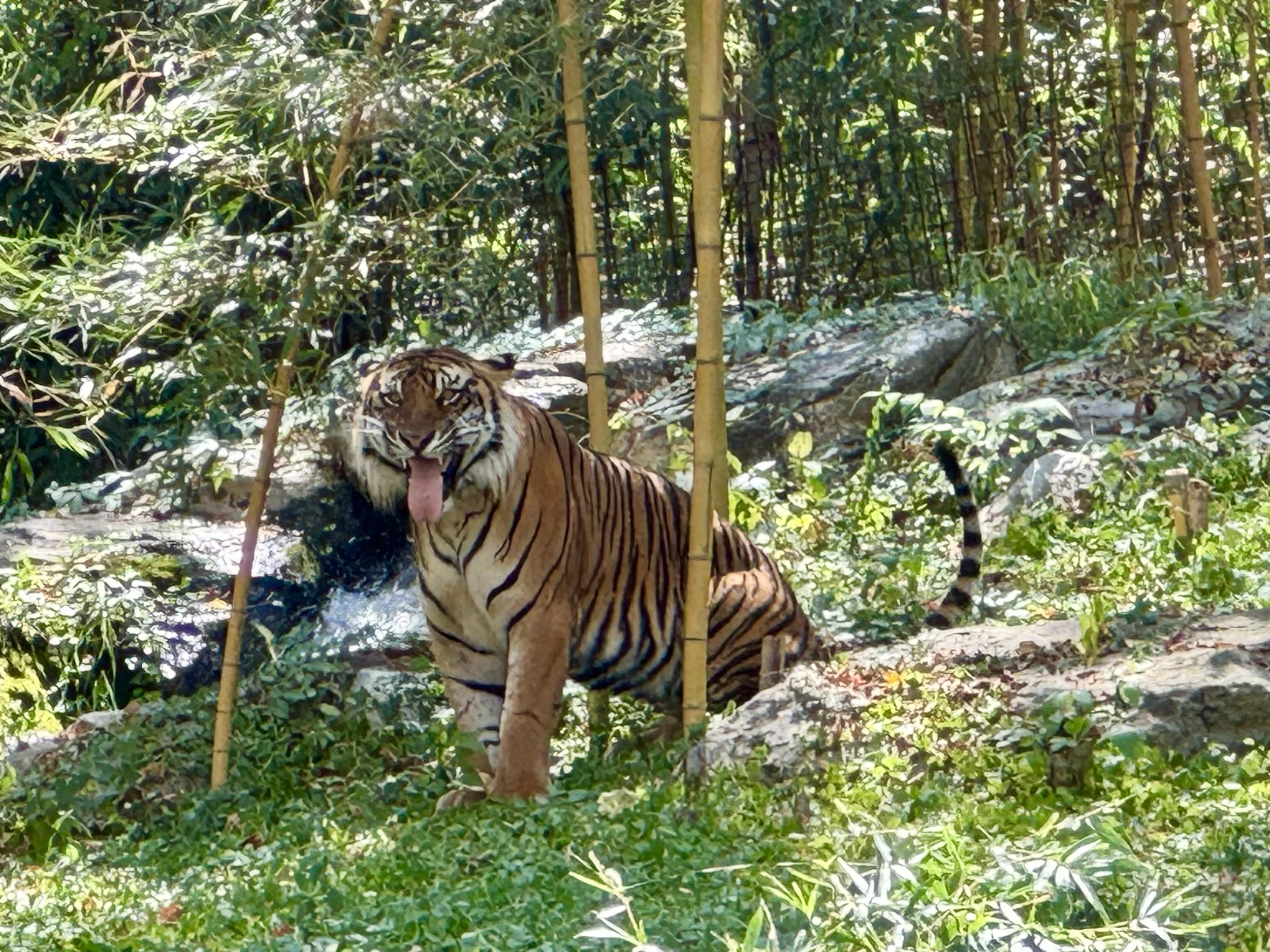
Interestingly, Sumatran tigers are the smallest surviving tiger subspecies, although there is absolutely nothing small about them when one is standing inches from your face. They are found only on the Indonesian island of Sumatra and are critically endangered. Displays inside the viewing room explain more about the threats they face and the efforts underway to protect them.
The indoor viewing room is also one of the best places to escape the heat. It is cool, comfortable and worth lingering in, particularly if the tiger is active. Animal visibility varies with the weather and time of day, so you may need to wait a few minutes or return later if the tiger is resting out of view. Take time to read all of the interesting signs and displays while you wait for an appearance.
✨ Pro Tip: Give children a moment to look through the glass before walking away, even if the tiger initially appears far across the habitat. Ours went from wandering near the water to standing directly in front of us, creating one of the most unforgettable moments of our visit. In fact, my daughter tells me he almost always comes up to the glass at some point during their visits.
🐻 Stop 9: Expedition Peru: Trek of the Andean Bear
🐾 Animals You May See: Andean bears, cotton-top tamarins, southern pudu, guinea pigs, freshwater stingrays and other animals from South America
💛 My Highlight: Discovering a family of tiny cotton-top tamarins through a floor-to-ceiling window inside the women’s restroom
🔎 Don’t Miss: The award-winning restroom, even if you don’t need to use it - trust me
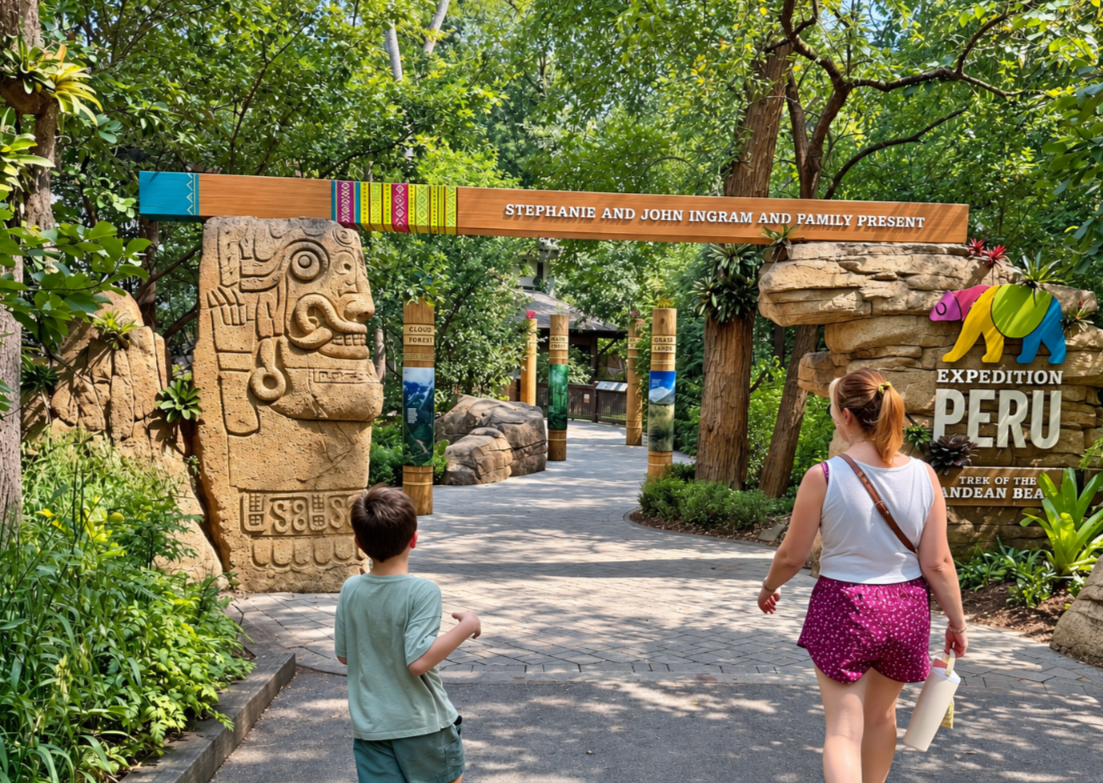
Expedition Peru transports visitors into a setting inspired by the Peruvian highlands, complete with an indigenous village and a lodge modeled after one near Machu Picchu. Indoor and outdoor viewing areas provide different opportunities to spot the Andean bears, while aquariums and smaller habitats introduce visitors to other South American animals.
Andean bears are also called spectacled bears because the lighter markings around their eyes can resemble eyeglasses. They are the only bear species native to South America and are excellent climbers, so remember to look up as well as across the habitat.
Unfortunately, we didn’t see either bear during our visit. However, the boys have seen them on many previous trips and absolutely loved watching them, which proves how different every zoo visit can be. Animals rarely follow a visitor’s schedule, and an exhibit that seems quiet one day may become a family favorite the next.
🚻 Don’t Miss the Tamarins in the Restroom
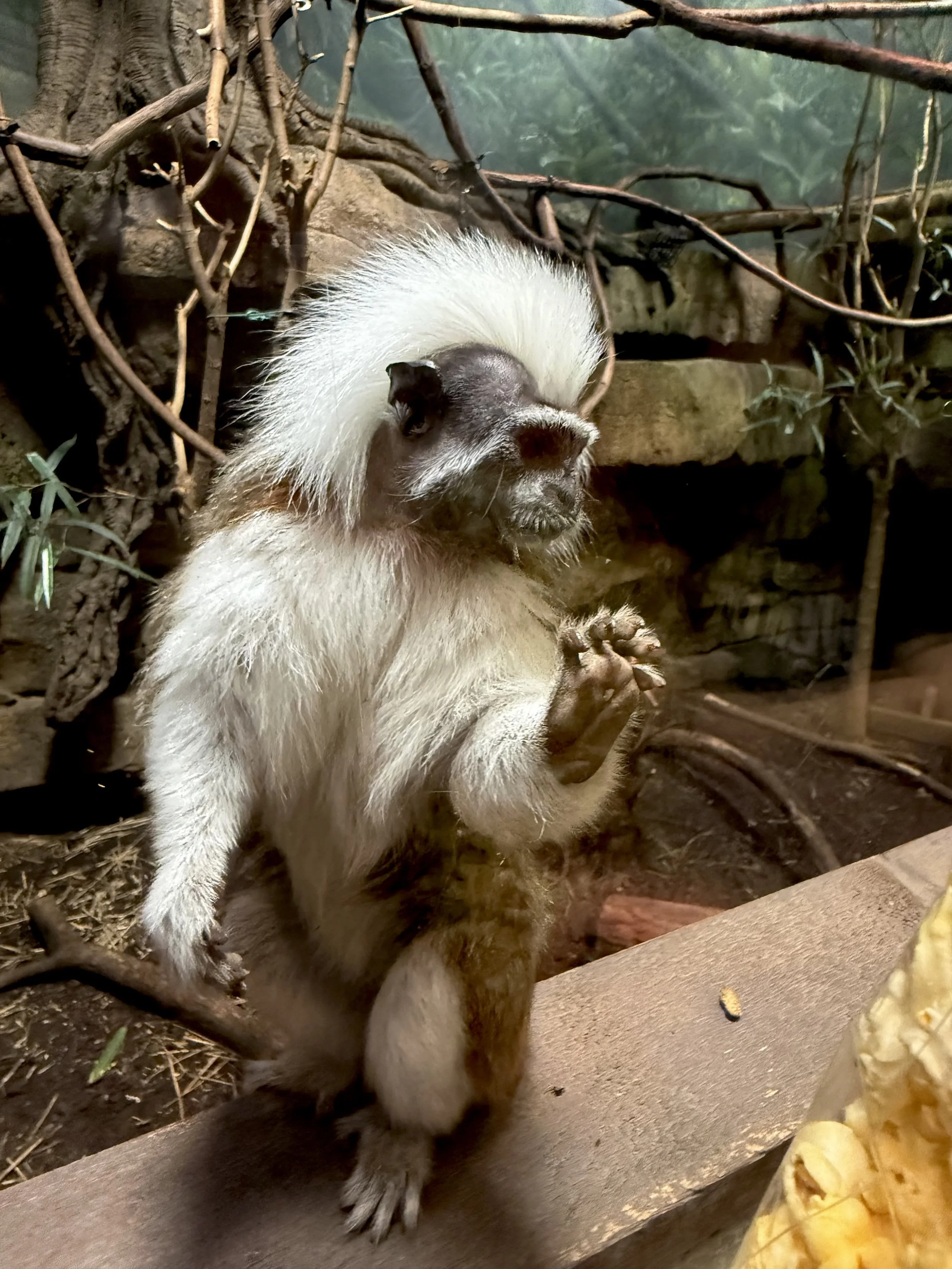
Oddly enough, the women’s restroom became one of our favorite stops in Expedition Peru. A floor-to-ceiling glass window looks directly into a lush habitat filled with tiny cotton-top tamarins. With their dramatic white crests and expressive faces, these critically endangered primates look like miniature creatures from a storybook. When we started taking pictures of one tamarin, several others quickly appeared, almost as if they were jealous and wanted some attention too. It was so much fun!
The restroom was named America’s Best Restroom in 2019 for its unusual combination of design, functionality and animal viewing. Even if you don’t need to use the facilities, it’s worth stepping inside to see what the tamarins are doing. You may never feel this excited about visiting a public restroom again!
✨ Pro Tip: Andean bears can be difficult to spot when they are resting or hiding among the climbing structures. Check the indoor and outdoor viewing areas, look above eye level and consider returning later if seeing the bears is one of your priorities.
🦩 Stop 10: New South American Habitat and Flamingo Lagoon
🐾 Animals You May See: Capybaras, a giant anteater, crested screamers and Chilean flamingos
💛 My Highlight: Ending our day beside the brilliantly colored flamingos
🆕 What’s New: The mixed-species South American habitat opened on September 4, 2026, just one day before our visit
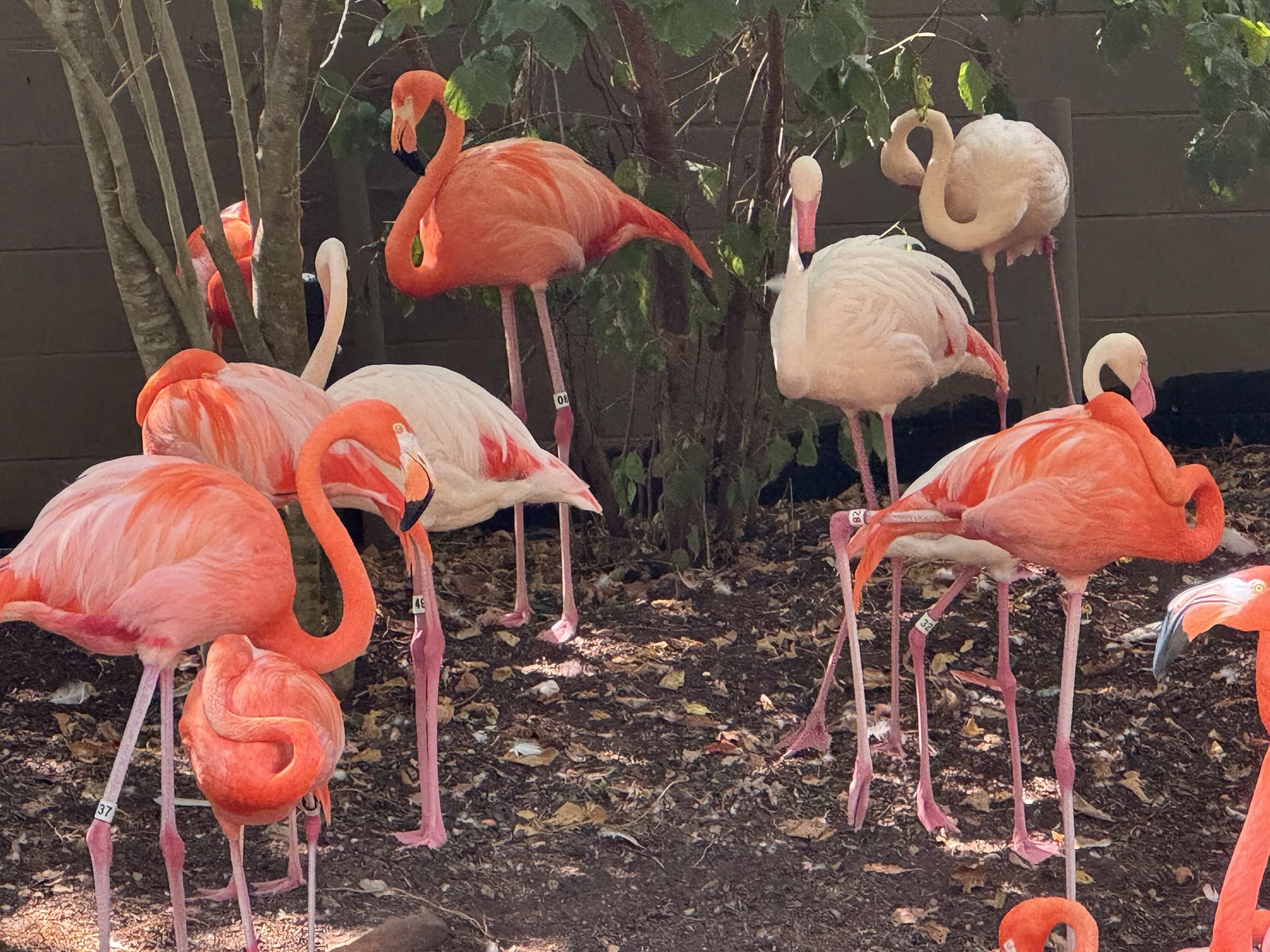
Flamingo Lagoon makes a colorful stop along the route. The large flock of bright pink Chilean flamingos is fascinating to watch and creates a fun backdrop for family photos.
Located beside Flamingo Lagoon is Nashville Zoo’s new mixed-species South American habitat. It had just opened the day before our visit, and features the zoo’s first capybaras, Andouille and Brie, alongside a giant anteater and crested screamers. It makes a perfect ending for the day.
Where to Eat at Nashville Zoo
Nashville Zoo has several places to purchase meals, snacks and drinks, although some locations operate seasonally or only on certain days. You’ll also find carts and kiosks throughout the zoo selling bottled drinks, popcorn, cotton candy, soft pretzels, frozen lemonade and Dippin’ Dots.
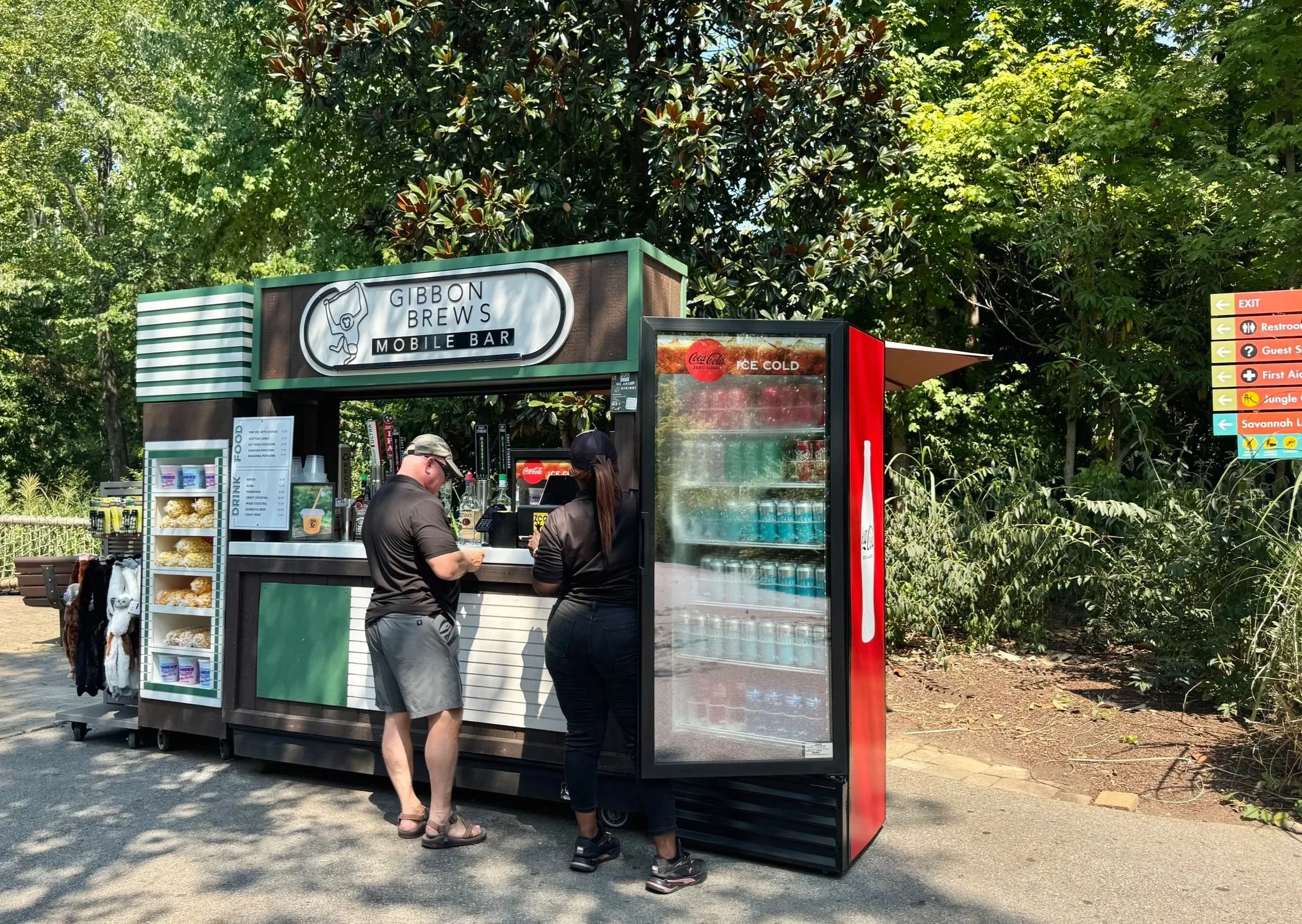
🍔 Quills Café & Grill: Located across from Gibbon Islands, Quills is the zoo’s main year-round restaurant. Its menu includes burgers, hot dogs, chicken tenders, quesadillas, wraps, salads, fries and children’s meals. It also has a spacious indoor dining room, making it a good place to escape the heat.
🍕 Screaming Gibbon Pizza Kitchen: Located near the Jungle Gym, this is where we ordered lunch. The menu includes personal pizzas, sandwiches, salads and children’s meals.
🍖 Snake Bites and TN BBQ Depot: This seasonal dining location serves barbecue sandwiches, loaded hot dogs, mac and cheese, nachos, pretzels, popcorn and other quick options. Unfortunately, it was closed during our visit.
🍦 Fat Cow Creamery: Stop here for coffee, espresso drinks, soft-serve ice cream and desserts.
🥪 Consider Bringing a Picnic: Nashville Zoo allows guests to bring outside food, making a picnic lunch one of the easiest and most affordable options for families. It is especially helpful if your children are selective eaters, you have dietary restrictions or you plan to spend most of the day at the zoo. Because I have celiac disease and am strictly gluten-free, I wish I had brought my own food.
✨ Pro Tip: Glass containers, disposable straws and lids are not allowed because they can be dangerous to the animals so be sure to leave those at home.
⚠️ Gluten-Free Warning: Screaming Gibbon Pizza Kitchen features pizza advertised as gluten-free, but it is cooked on the same pans as the regular pizza. Others have reported that staff made accommodations, but they were unable to do so for me. If you have celiac disease or a serious allergy, ask about cross-contamination before ordering. Bringing your own food may be the safest option.
Tips for Visiting Nashville Zoo
A little planning can make a huge difference in how much you enjoy the Nashville Zoo, especially during the summer or when visiting with younger children. After spending an entire day exploring, these are the practical tips I think you’ll want to know before arriving.
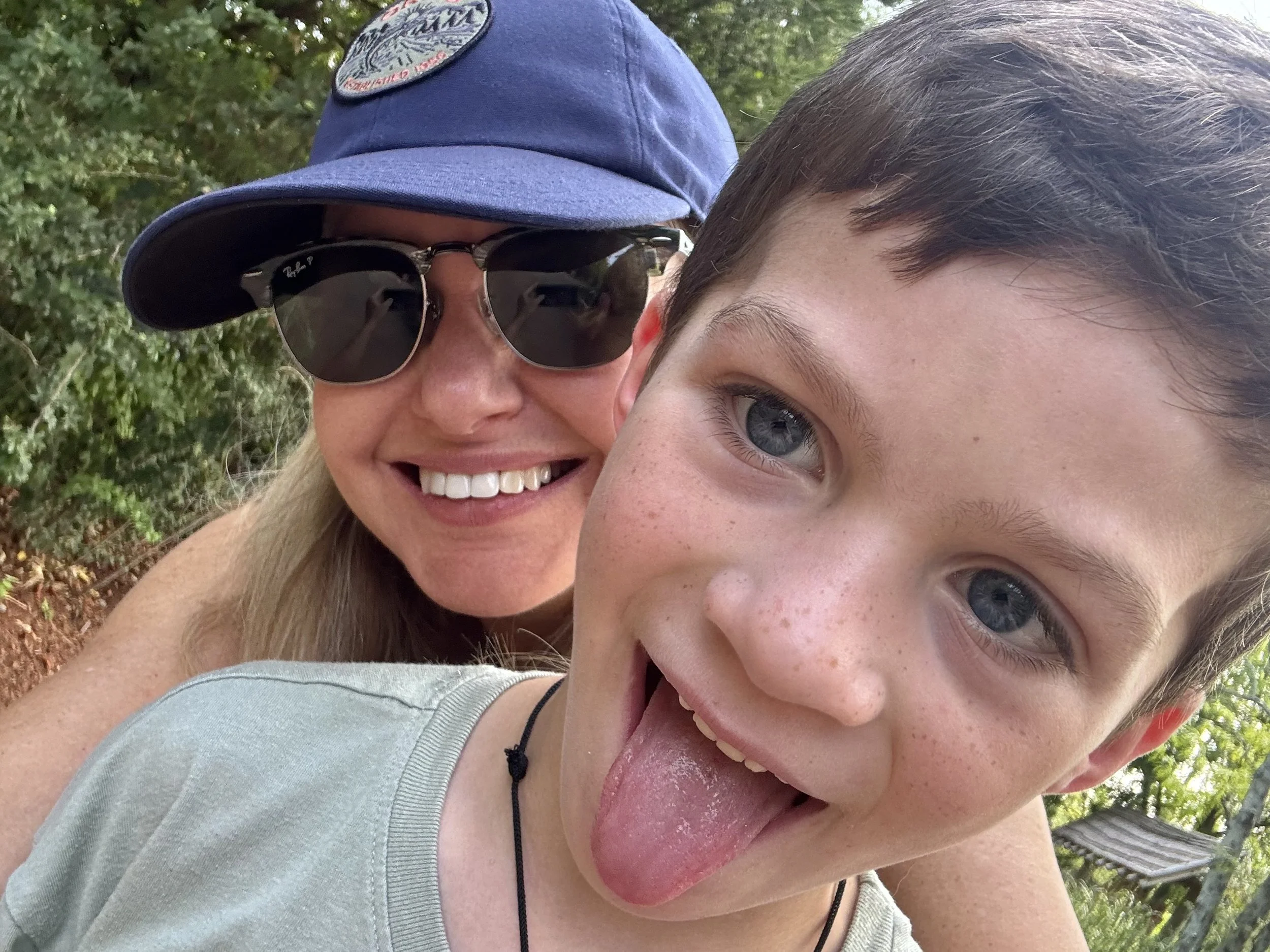
🌅 Arrive Early for Cooler Temperatures and Active Animals: We arrived around 9:30 a.m. while many animals were still active. As the day grew hotter, they became noticeably more lethargic. An early start also helps you avoid the larger crowds.
🪭 Bring a Portable Fan: The small portable fans we brought were a big hit with the kids. It helped keep them comfortable while walking between exhibits and waiting outside during the hottest part of the day. If you don’t already have one, they sell fans there.
🗺️ Download the Zoo App Before Arriving: Nashville Zoo no longer provides printed maps. Download the app before your visit so you can locate exhibits, dining options, restrooms and indoor cooling areas without stopping repeatedly to study your phone.
👟 Wear Comfortable Shoes and Consider a Stroller: Nashville Zoo is larger than it initially appears, and you will cover a considerable amount of ground. We walked over 12,000 steps during our visit. Wear supportive shoes and bring a stroller for younger children. Strollers are also available to rent near the entrance.
☀️ Plan Indoor Stops Around the Heat: Summer temperatures can make a full day at the zoo exhausting, so alternate outdoor habitats with cooler indoor spaces. Unseen New World and its walk-through aviary provide one of the best extended breaks from the heat. You can also cool off inside the viewing areas at Tiger Crossroads, Expedition Peru, Quills Café & Grill and Screaming Gibbon Pizza Kitchen.
🌧️ Check the Forecast Before Your Visit: Rain is common in Nashville, so bring a lightweight poncho or umbrella if showers are expected. If you’re caught without one, disposable ponchos are available for purchaes in the zoo’s gift shop.
📅 Check the Daily Schedule: Review the day’s schedule when you arrive for keeper talks, animal encounters, feedings and attraction updates.
🎟️ Consider Upgrading Your Admission to a Membership: If you enjoy your visit and think you’ll return, apply your admission fees toward a Nashville Zoo membership. You can visit the Membership Building before leaving or contact the membership department afterward with the order number from your admission. Memberships include regular zoo admission and parking for a full year, with additional benefits and guest allowances that vary by membership level.
My daughter’s family has a zoo membership that includes guest privileges and 10% off most purchases made at the zoo including food, drinks, and the gift shop.
💧 Bring Refillable Water Bottles: Nashville Zoo has water refill stations available for guests, so bring reusable bottles and refill them throughout the day.
Seasonal Events at Nashville Zoo
Nashville Zoo hosts several special events throughout the year, but two of its biggest family traditions are Boo at the Zoo and Zoolumination. Both transform the property after regular zoo hours and require separate event admission, so do not assume they are included with a daytime ticket.
Event dates, activities and ticket policies can also change from year to year so be sure to check the zoo’s current calendar of events before planning your visit.
✨ Pro Tip: If you’re hoping to see a particular animal, you should probably plan a visit during regular daytime hours. Many animals settle indoors at night, and not every habitat remains open during after-hours events. Boo at the Zoo and Zoolumination are primarily about enjoying the seasonal atmosphere and activities rather than seeing the animals.
🎃 Boo at the Zoo
Boo at the Zoo transforms Nashville Zoo into a family-friendly Halloween celebration with elaborate decorations, trick-or-treating, carnival-style entertainment and plenty of opportunities for children to wear their costumes. The event is designed to feel festive rather than frightening, making it a fun Halloween activity for families with younger children.
Boo at the Zoo typically takes place on select evenings in October and requires a separate ticket from regular daytime admission. Activities and entertainment vary, so check the current event information before attending.
👉 You can find more Halloween attractions, festivals and seasonal activities in my complete guide to Halloween in and around Nashville.
🏮 Zoolumination During the Holiday Season
Zoolumination is Nashville Zoo’s large-scale lantern festival, filling the pathways with illuminated animals, flowers and elaborate scenes. The glowing displays create a completely different experience from a regular zoo visit and make the event feel more like walking through an outdoor art exhibition.
Zoolumination generally takes place during the holiday and winter season and requires separate admission from a daytime zoo ticket. Because the focus is on the lanterns rather than viewing animals, consider visiting the zoo during the day if seeing the habitats is a priority, then attending Zoolumination as its own evening experience.
Frequently Asked Questions
Still have questions about planning your visit? Here are quick answers to some of the most common questions about Nashville Zoo.
Is Nashville Zoo Worth Visiting?
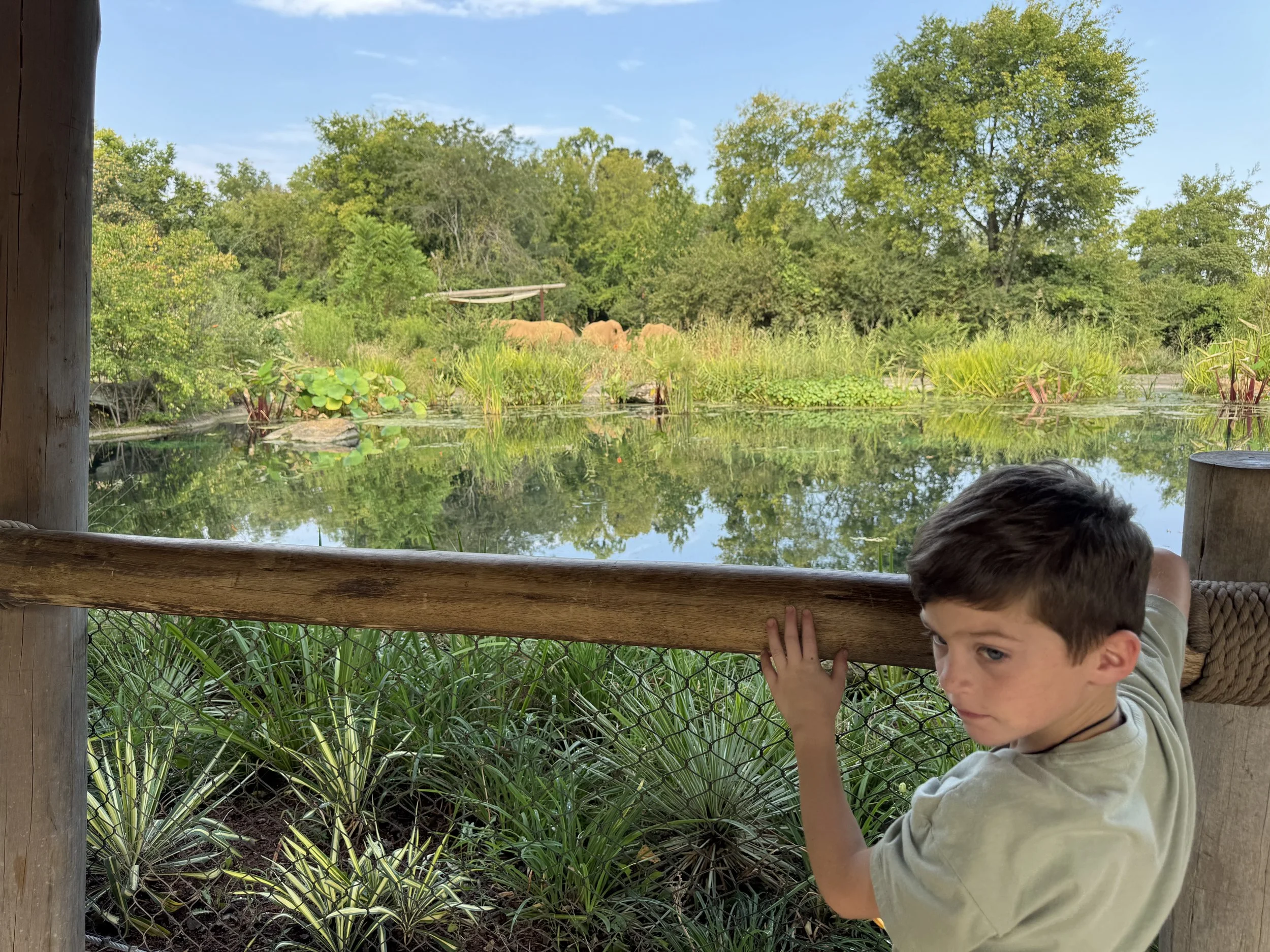
Yes. Nashville Zoo is worth visiting for its immersive habitats, impressive variety of animals and experiences that bring you surprisingly close to the wildlife. You can walk through a kangaroo habitat, watch Amur leopards cross overhead, view Sumatran tigers through floor-to-ceiling glass and search for tropical birds inside a walk-through aviary. The Veterinary Center also offers a fascinating look at animal care that you will not find at every zoo.
How Long Do You Need at Nashville Zoo?
Allow at least three to four hours to see the major animal exhibits. Plan on spending most of the day if your children want to play in the Jungle Gym, ride the attractions, attend animal programs and stop for lunch.
Is Nashville Zoo Good for Toddlers and Young Children?
Yes. Younger children can enjoy the animal exhibits, Jungle Gym, carousel, train and walk-through habitats. Bring or rent a stroller because the zoo is larger than it initially appears and requires considerable walking.
Does Nashville Zoo Rent Strollers?
Yes. Single and double strollers are available to rent near the entrance on a first-come, first-served basis.
Can You Bring Food Into Nashville Zoo?
Yes. Guests can bring their own food and enjoy a picnic inside the zoo. Glass containers, disposable straws and lids are not permitted because they can be dangerous to the animals.
Is Nashville Zoo Mostly Outdoors?
Yes. Most animal habitats and pathways are outdoors, although several indoor exhibits and viewing rooms provide breaks from the weather. Unseen New World, Tiger Crossroads, Expedition Peru, and the restaurants are useful places to cool off during hot weather.
Is a Nashville Zoo Membership Worth It?
A membership can be an excellent value for families who expect to visit more than once. It includes regular admission and parking for a year, with additional benefits and guest privileges varying by membership level. Compare the cost of admission for your family with the current membership prices.
Are Nashville Zoo Rides Included With Admission?
No. General admission includes the animal habitats and Jungle Gym, but rides, the 4D theater and animal feedings require additional attraction tickets or an Adventure Pass. Compare the options if your children plan to experience several attractions or ride a favorite ride more than once.
More Nashville Travel Guides
Unique Things to Do in and Around Nashville - Hidden Gems, Quirky Attractions, and Unforgettable Experiences
Where to Find Dolly Parton Murals in Nashville and Across America
Johnny Cash Museum - Step Inside the Life, Music, and Legacy of the “Man in Black”
From Bridles to Barrels - How a Famous Thoroughbred Farm Became Nashville’s Oldest Winery - Belle Meade Historic Site & Winery