
Newspaper Rock Utah: Complete Visitor Guide to One of America's Largest Petroglyph Sites
Tse’ Hane -“The Rock That Tells A Story”

About an hour drive from Moab off Highway 211 is a truly remarkable landmark known as Newspaper Rock. In Navajo, it is called Tse’ Hane or “rock that tells a story.” It’s one of the largest collections of concentrated petroglyphs known to exist with over 650 incredible designs carved into a 200 square foot rock panel.
Nobody knows exactly what all of the symbols here actually mean. Some may record successful hunts, others may represent clans or families, while others may simply tell stories that have been lost to time. Standing before Newspaper Rock today feels a bit like opening a newspaper written in a language no one can fully translate.
👉If you're driving to Canyonlands National Park (especially the Needles District), don't make the mistake of driving right past Newspaper Rock. This fascinating roadside stop takes less than 20 minutes to see!
⚠️ ALERT: As of 6/28/26 Canyonlands National Park has temporarily closed The Needles district due to wild fires.
👉 Visiting Canyonlands too? Get my Ultimate Guide to Canyonlands National Park as well as my Guide to Choosing Which Canyonlands District You Should Visit with side-by-side comparisons of each of its districts.
📌 Newspaper Rock at a Glance
📍 Location: UT-211 near Monticello, Utah, on the scenic drive to Canyonlands National Park's Needles District
⏰ Time Needed: 15–30 minutes
💲 Cost: Free
🐶 Dogs Allowed: Yes, on a leash
♿ Accessibility: Fully accessible viewing area with a paved walkway from the parking lot
📅 Best Time to Visit: Spring and fall offer the most comfortable temperatures, though Newspaper Rock is open year-round
🗿 Petroglyphs: Over 650 ancient carvings dating back nearly 2,000 years
🚗 Closest National Park: Canyonlands National Park (Needles District) – approximately 20 minutes
Table of Contents

What is Newspaper Rock?
The first carvings at Newspaper Rock were created around 2,000 years ago by Anasazi, Navajo and other tribes. The rock is covered with desert varnish, a dark coating made of blackish manganese-iron deposits created by oxidation in arid desert air. When carved, the lighter sandstone colors that lay beneath become exposed, and the contrast in the colors creates some of the most dramatic glyphs I’ve ever seen.

The carvings include symbols and animals found in the area like bison, deer and pronghorn sheep.
There are also what appear to be snakes, turtles, oversized human prints and even broad-shouldered animal-headed men.
The drawings read like a story giving the monument its name, Newspaper Rock. Why there is such a large concentration of petroglyphs here remains a mystery as does the meaning of each depiction.
What You'll See at Newspaper Rock
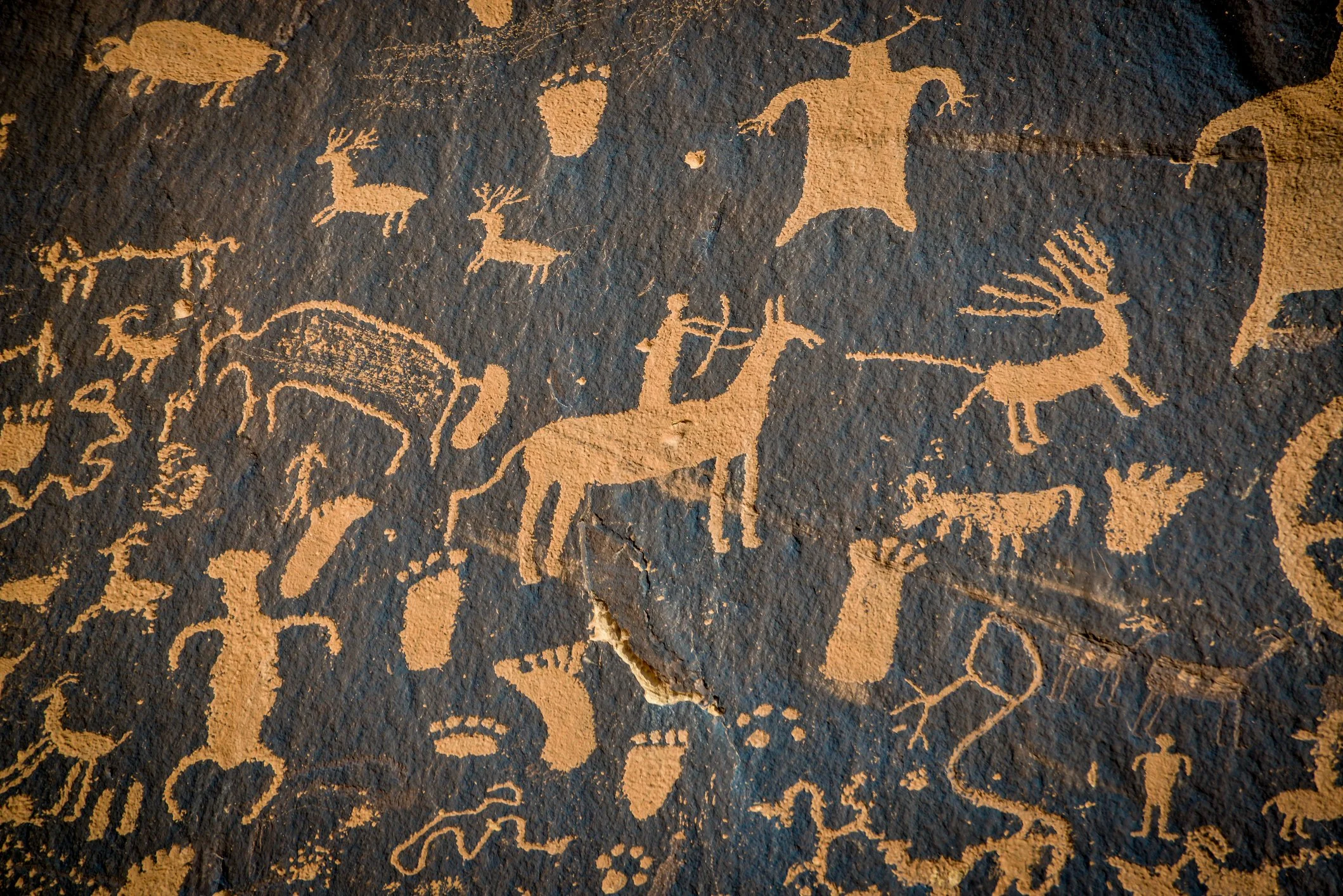
Visitors to Newspaper Rock can marvel at over 650 individual carvings that were created over approximately 2,000 years depicting animals, human figures, footprints, hunting scenes, symbols, and mysterious geometric shapes. Over generations, more and more carvings were added alongside the older ones such that the rock almost resembles a large community bulletin board hence its clever nickname – “Newspaper Rock.”
Tips for Visiting Newspaper Rock
Here are some tips to help you make the most of your visit to Newspaper Rock.
✨ Visit in the morning or late afternoon for the best lighting.
✨ Visitors must stay behind a low fence in order to protect the rock carvings. Although you can easily see them with the naked eye, bring binoculars or a zoom lens to better appreciate the smaller carvings.
✨ Don't touch the rock art or go past the fencing. Oils from hands damage the fragile desert varnish and can ruin the ancient carvings.
✨ Combine your visit with a trip to Canyonlands Needles District since it's directly along the route.
✨ Be sure to read the interpretive for fun facts and symbols they point out that you might otherwise miss.
Is Newspaper Rock Worth Visiting?
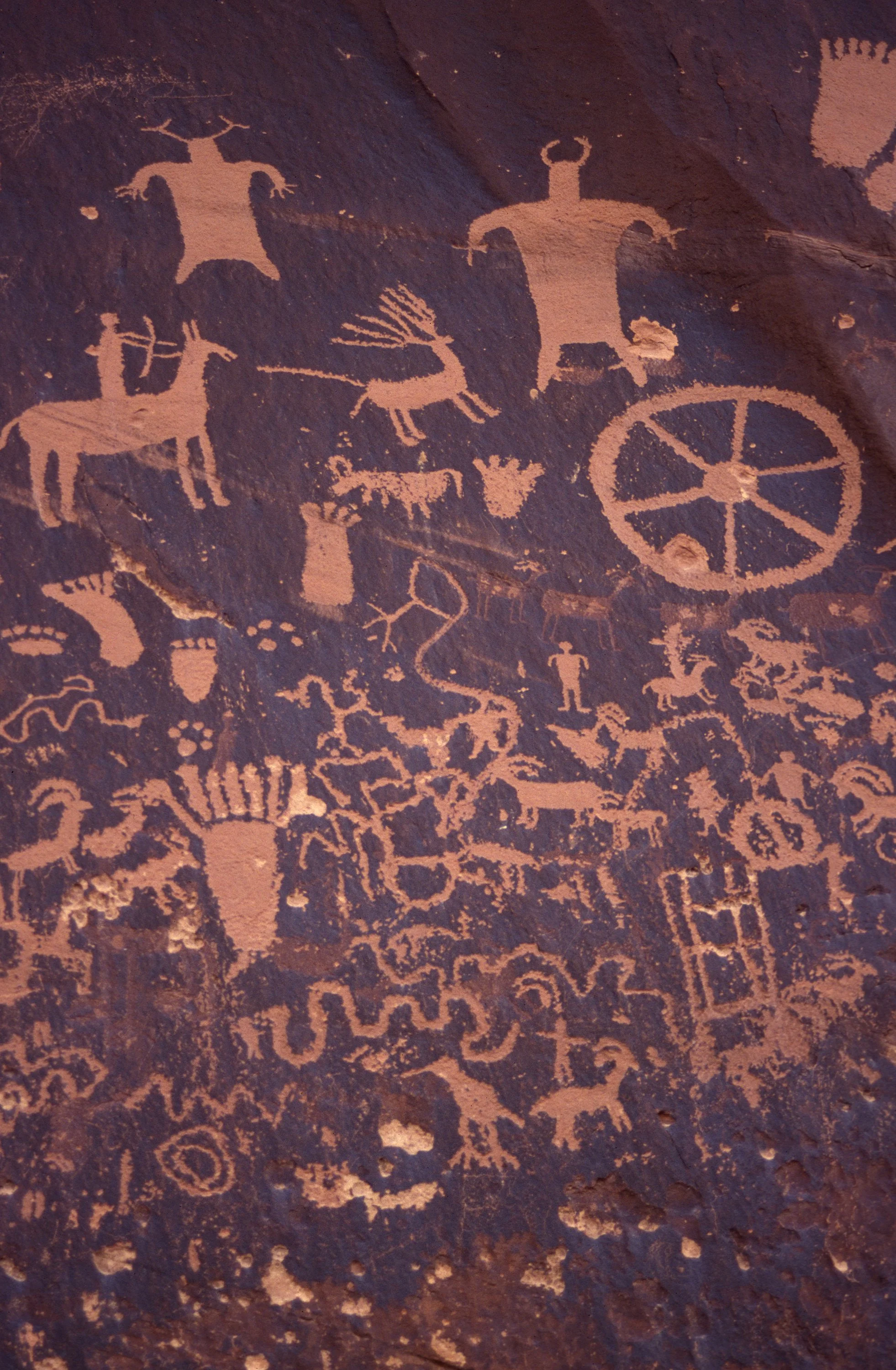
Newspaper Rock is absolutely worth a stop. It is perhaps one of the easiest and most impressive petroglyph sites to visit in all of the American Southwest. Its convenient roadside location makes it a perfect pit stop on the drive to Canyonlands National Park's Needles District, and visitors can experience it without having to hike.
Frequently Asked Questions
💡 Planning a visit? Here are some FAQs about Newspaper Rock so you can make the most of your visit.
How much time do you need to visit Newspaper Rock?
Newspaper Rock is a short visit. Most visitors will want to spend about 15 to 30 minutes viewing the petroglyphs and reading the interpretive signs.
Is there a fee to visit Newspaper Rock?
No. Newspaper Rock State Historic Monument is free to visit
Is Newspaper Rock accessible?
Yes. Newspaper Rock is accessible to most. There is a paved parking area with a very short, accessible path leading to the viewing area.
Can you touch Newspaper Rock?
No. There is a protective low fence and observation area around Newspaper Rock to prevent visitors from touching the petroglyphs or climbing on them. Touching the rock can damage the fragile desert varnish that preserves the ancient carvings.
How old are the petroglyphs?
The oldest carvings at Newspaper Rock are believed to date back nearly 2,000 years, with different generations and Native American cultures adding new images over the centuries.
Is Newspaper Rock inside Canyonlands National Park?
No. Newspaper Rock is located along Utah Highway 211 on the drive to the Needles District of Canyonlands National Park, making it an easy stop before entering the park.
Things to Do Near Newspaper Rock
One of the best things about visiting Newspaper Rock is its location. It's an easy and quick stop along one of the most scenic drives in Utah, making it possible to combine it with other destinations.
📍 Needles District, Canyonlands National Park – 12 miles (about 20 minutes) – The closest entrance to Canyonlands National Park and the perfect next stop after Newspaper Rock.
📍 Island in the Sky District, Canyonlands National Park – 98 miles (about 2 hours) – A completely different section of Canyonlands known for its breathtaking overlooks and dramatic canyon views.
📍 Arches National Park – 73 miles (about 1 hour, 25 minutes) – Home to more than 2,000 natural stone arches, including the iconic Delicate Arch and Landscape Arch.
📍 Dead Horse Point State Park – 82 miles (about 1 hour, 35 minutes) – Famous for one of the most photographed overlooks in the American Southwest and spectacular views of the Colorado River.
📍 Indian Creek Scenic Byway – Immediately adjacent – One of Utah's most scenic drives, known for towering red rock cliffs, world-class rock climbing, and beautiful desert scenery.
📍 Bears Ears National Monument – Approximately 35–40 miles (about 45–60 minutes) – A vast landscape rich in Native American history, archaeological sites, and stunning backcountry scenery.
📍 Church Rock – About 1 mile (2 minutes) – An impressive sandstone formation located just west of Newspaper Rock.
📍 Six Shooter Peaks – Approximately 15 miles (20–25 minutes) – Two striking mountain peaks that dominate the skyline and are a favorite for photographers.
📍 Moab, Utah – 52 miles (about 1 hour) – The adventure capital of Utah and a great base for exploring Arches, Canyonlands, rafting, hiking, and off-road trails.
More Utah Travel Guides
👉 Visiting Canyonlands:
Guide to Choosing Which Canyonlands District You Should Visit - Side-by-side comparisons of each of district
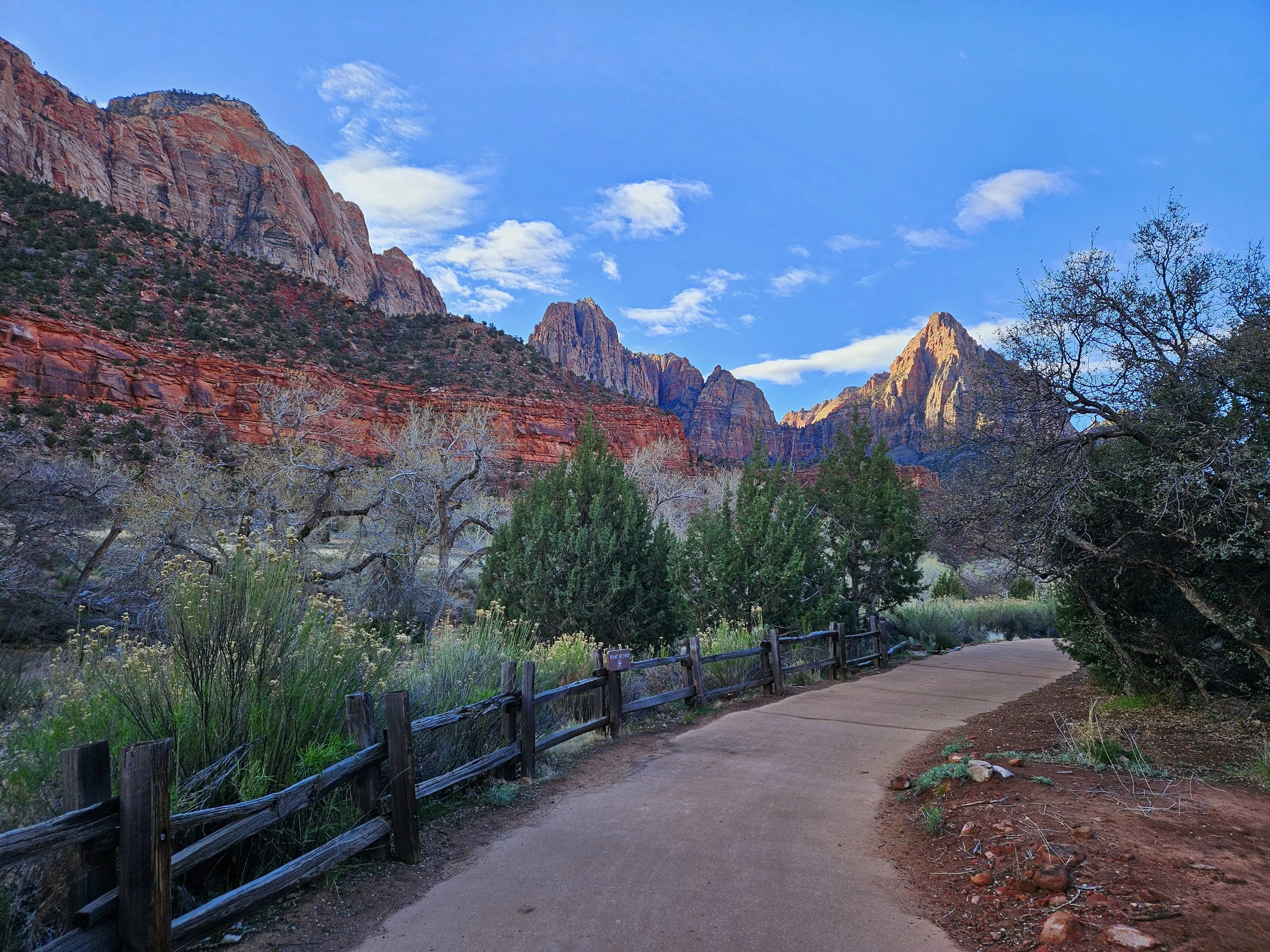
Arches National Park Guide - The World’s Largest Concentration of Natural Stone Arches
Capitol Reef National Park - Utah’s Hidden Treasure
Ultimate Guide to Visiting Zion National Park - A Landscape Dominated by Steep Red Cliffs & The Virgin River
Zion National Park - How to Spend 5 Days Without the Crowds - The Itinerary You Need